

Nathaniel Bacon’s rebellion here in Virginia has been regarded by some as a brave stand against the rule of the Crown, and by others as a heated personal battle over land ownership and an attempt to further drive away Native Americans. Whatever one’s personal opinion may be, the Rebellion played a significant role in Gloucester’s history.
Many Jamestown settlers in the 1600s faced hard times as tobacco prices dropped. Individuals were unable to pay high colonial taxes and poor farmers on the edges of the settlement wished to expand their operations westward in search of better prospects. Doing so proved difficult as Native Americans fought back against incrimination on to their ancestral lands. The colonists living in this region called for aid from the government, but their requests were denied.
Virginia Governor William Berkeley tried to keep the peace among the settlers and Native Americans, but unrest soon began among the colonists who felt Berkeley was favoring the more wealthy settlers. Nathaniel Bacon began to challenge Berkeley’s leadership, which led to a bitter face-off between the two. When Berkeley refused to support attacks on Native Americans on the edges of Jamestown, Bacon took matters into his own hands and began building a militia. Bacon was named a rebel for his actions.
Tensions heightened when Bacon was elected to a newly-formed legislative body dedicated to solving the issue. Bacon offered apologies to the governor for his previous rebellious actions, but was eventually dismissed by Berkeley. Bacon was greatly angered by his treatment by the governor, and began gathering supporters and planning his course of action. The two continued to bash each other as Bacon and his followers began raids around the colonies and leading attacks against friendly Native American tribes. Berkeley echoed his condemnation of Bacon and his rebellion, which only further inflamed the situation.
Bacon soon turned his army towards Jamestown. His militia burned and pillaged their way through the town and left it in ruin. Berkeley fled to safety. Not long after, Bacon was overtaken by sickness and later died at Gloucester Hall. His followers began to scatter and his rebellion fell apart. Berkeley resumed governorship, but was soon replaced.
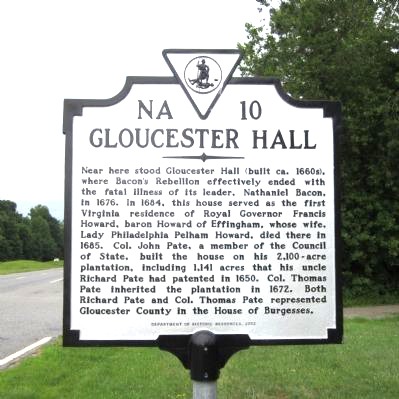
The house that once stood has been reclaimed by time and nature. A historical marker has been placed in the area where Gloucester Hall once existed, commemorating these events as well the distinguished men who called Gloucester Hall home.
The marker reads: Near here stood Gloucester Hall (built ca. 1660s), where Bacon’s Rebellion effectively ended with the fatal illness of its leader, Nathaniel Bacon, in 1676. In 1684, this house served as the first Virginia residence of Royal Governor Francis Howard, baron Howard of Effingham, whose wife, Lady Philadelphia Pelham Howard, died there in 1685. Col. John Pate, a member of the Council of State, built the house on his 2,100-acre plantation, including 1,141 acres that his uncle Richard Pate had patented in 1650. Col. Thomas Pate inherited the plantation in 1672. Both Richard Pate and Col. Thomas Pate represented Gloucester County in the House of Burgesses.
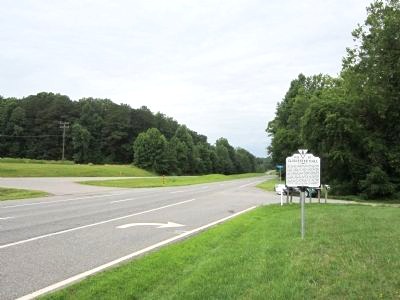
This marker is located near Gloucester Courthouse, Virginia, in Gloucester County. It is at the intersection of George Washington Memorial Highway (U.S. 17) and Bacons Lane, on the right when traveling west on George Washington Memorial Highway.
Information courtesy of history.com and the Historical Marker Database.