

As we reflect on our country’s 250 birthday milestone, we are reminded of the historical roots that run deep throughout our coverage area. The Northern Neck is often referred to as the “Birthplace of the Nation” as the birthplace of three of the first five U.S. Presidents: George Washington, James Madison and James Monroe. During this Rivah season, we are highlighting a few of the sites, volunteers and crafters who help bring history to life.
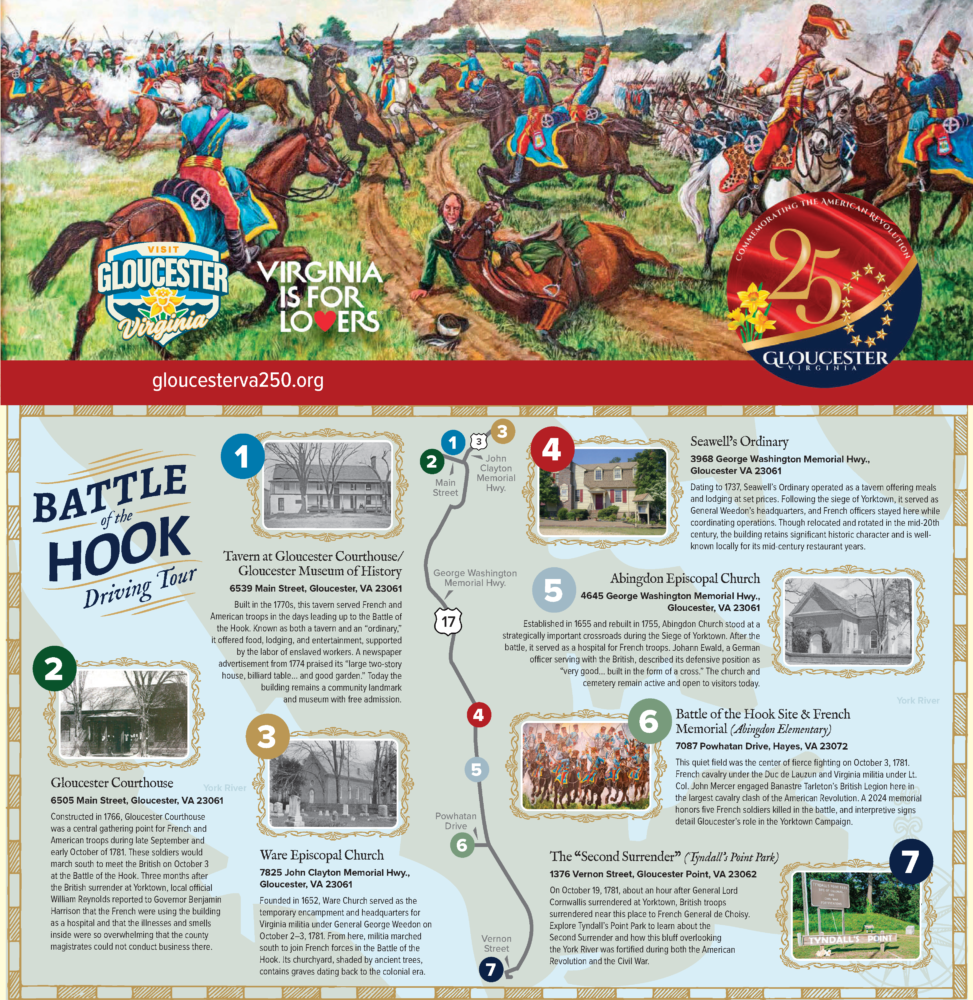
U.S. Route 17 in Gloucester traces the path of a lesser known Revolutionary War cavalry skirmish that had big implications in ending the war for independance.
Yorktown on the south side of the York River is a half mile by water from Gloucester Point, then known as “The Hook.”
In late summer 1781 the British army of Lord Cornwallis dug in at Yorktown. He had planned to cross the York River deeper into Virginia.
Surrounded
The armies of George Washington and French ally Jean Baptiste Rochambeau arrived at Yorktown on Sept. 28 and surrounded Cornwallis. He planned to cross the York River and fortify The Hook, the narrow spit of land on the north shore, giving the British control of a deep water port at Yorktown for British war ships.
Cornwallis had been ordered to send troops by ship to British-held New York City. But this was impossible, since the French fleet had blockaded the York River after repulsing the British Navy there.
Foraging
Needing food for his British troops, Cornwallis sent foraging details the only direction he could — north into Gloucester. On the morning of Oct. 3, 1781, British troops located a corn field about three miles north of The Hook, in an area now known as Abingdon.
They took corn and as they headed south towards Yorktown, the Allies caught up to them. This would be the last raiding detail of the war. Sixteen days later, the British surrendered. America was free!
A field around Abingdon Elementary School on Powhatan Drive, near Route 17 is where The Battle of The Hook took place.
The Battle of The Hook — largest cavalry clash of the Revolutionary War
The following contains excerpts of Lt. Col Burruss’ article, originally published in the Gloucester-Mathews Gazette-Journal, which granted permission for its use.
On the morning of Oct. 3, 1781, British Lieutenant Colonel Banastre Tarleton was leading a “grand forage” with some 300 cavalry and a company of infantry north out of Gloucester Point — also known as “The Hook” due to the shape of land jutting into the York River.
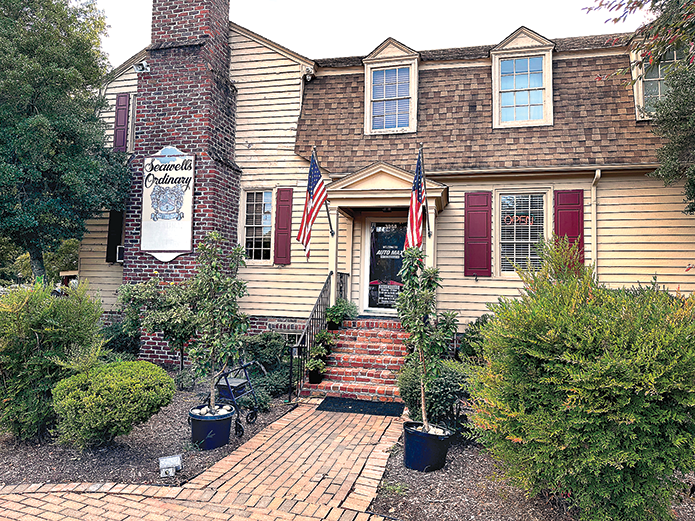
Lt. Col. Burruss described the battle like this: “The English had completed their forage, leaving a rear guard to cover their return to their lines. Just south of Seawell’s Ordinary, a French-American force led by Armand-Louis de Gontuart, Duc de Lauzun encountered Tarleton and his rear guard, and a brief skirmish of the French advanced guard and Tarleton’s dragoons occurred, which resulted in Tarleton being unhorsed when a [French] hussar’s lance struck the horse next to his. He was nearly captured by the French, but his dragoons quickly moved to rescue him.”
Charge!
“Both commanders formed their cavalry on line for a charge, and what followed was the largest, though brief, cavalry engagement of the Revolutionary War, called the Battle of The Hook. Lauzun’s cavalry, numbering as many as 300 horses, charged Tarleton’s British Legion and Queen’s Rangers, which numbered nearly the same. Tarleton had deployed infantry to protect his flank, and they were able to break the Allies’ charge, and Lauzun fell back to reform.”
“As Lauzun had no supporting infantry on the field yet, John Mercer and his 160 Grenadier militia ran forward and formed forward of the Lauzun’s French cavalry, and engaged both the British cavalry to their front, and the enemy infantry advancing on their left.”
Firefight
“Their intense fire repelled the cavalry, and one of the Grenadiers — thought to be Sergeant John White of the Kingston militia — killed the officer at the head of the British infantry, and their advance was stopped within a 100 yards of the Allies. White reported that he fired 13 rounds of musket fire — probably six or seven minutes of constant fire at close range, which was firestorm of musketry in those days. Mercer reported that there were fewer than a 100 rounds of ammunition left among his men.
“By then, Lauzun had reformed to charge, but as he advanced, Tarleton ordered a retreat, and they withdrew in defeat back into their lines at Gloucester Point. The Crown forces never ventured far from their lines for the rest of the campaign. And with their sources of forage gone, and the investment [blockade] of their position by some 3,000 Allied troops, their fate was sealed.
“On the 19th of October 1781, Cornwallis surrender the bulk of his army in Yorktown. Across [the York River] the Allies in Gloucester took the surrender of some 1,050 men and 308 horses in the final surrender of British forces in America.”
Lt. Col. Lewis H. “Bucky” Burruss served 22 years in the U.S. Army Special Forces, including Vietnam’s Mike Force. An original Delta Force member, he participated in operations in Grenada, Iran and the Middle East. Highly decorated, he received the Silver Star, Legion of Merit, and the U.S.
Special Operations Command Lifetime Achievement Award. Now retired, the Gloucester resident has since taken up a second career as an author, writing several acclaimed novels, including “Mike Force” and “All That Matters,” as well as numerous pieces for the Philadelphia Inquirer.