
Back in the 1980s, the late Gene Ruark posed for a photo in front of the historic Kelly House in Deltaville for a front page story in the Southside Sentinel. In the story, he introduced his dream publicly of creating a maritime museum in Deltaville.
From that dream has come an answer to many other dreams as today the Deltaville Maritime Museum and Holly Point Nature Park, established in 2002, is a statement that “dreams do come true.”
During the life history of Chesapeake Bay wooden deadrise boats, starting in the 1880s to today, Deltaville was a center of wooden boat “deadrise and cross-planked” building. The cottage boatbuilding industry grew in the backyards throughout the village and customers came from one end of the Chesapeake Bay to the other to have a wooden boat built.
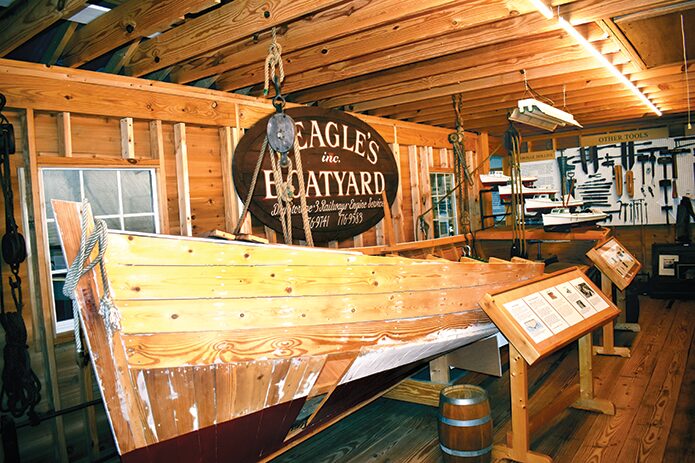
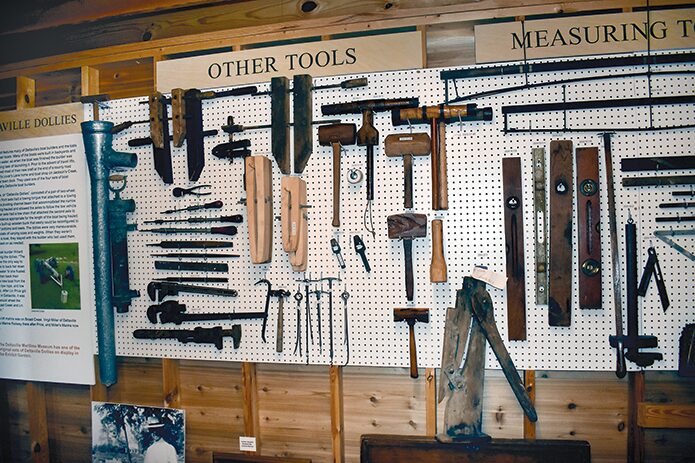
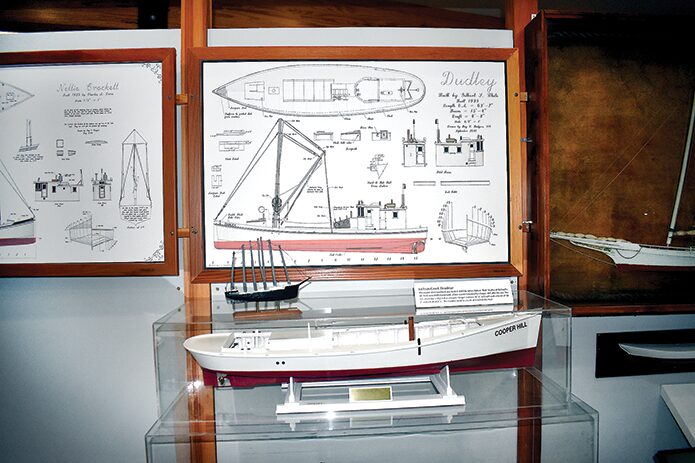
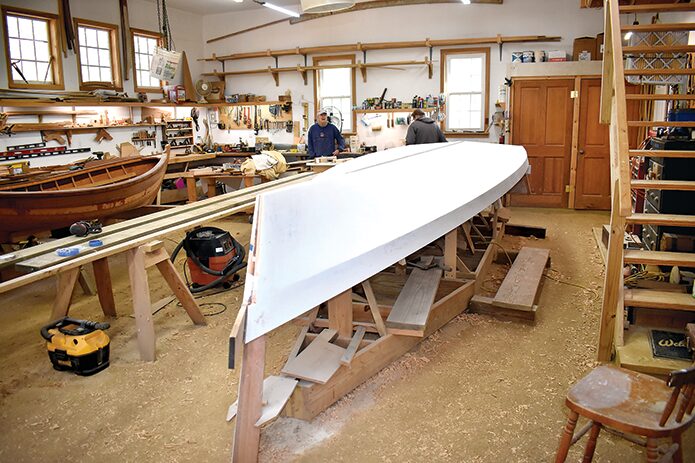
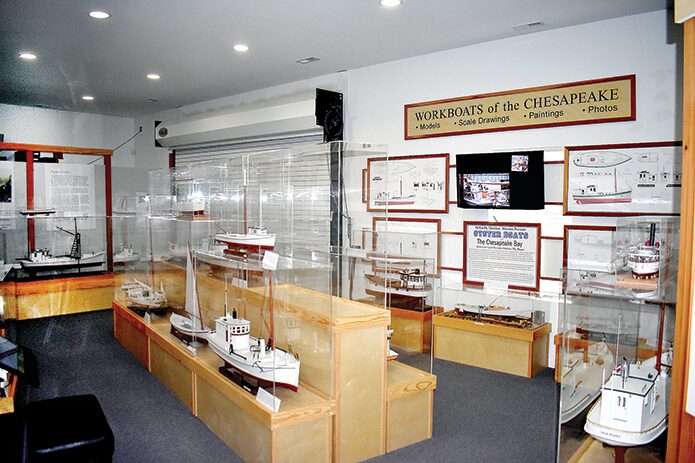
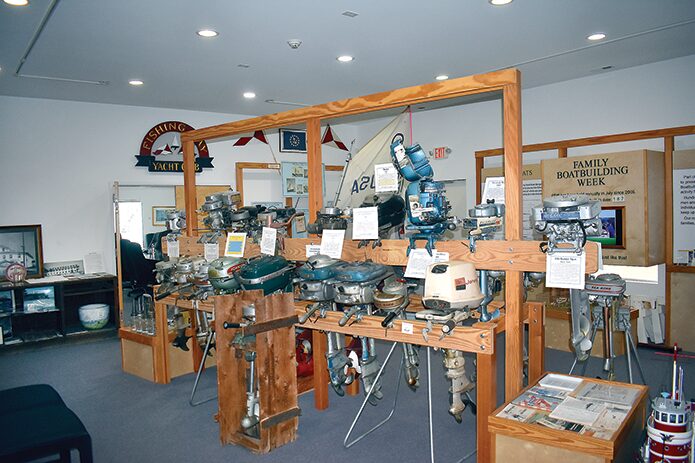
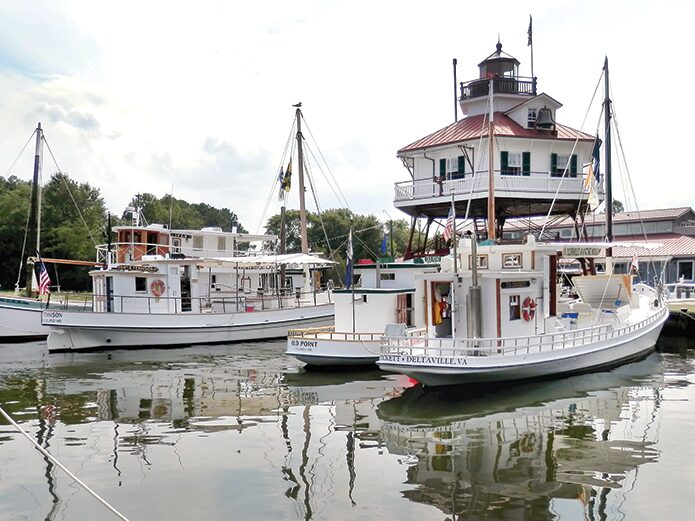
Today, the Deltaville Maritime Museum tells that story through dynamic inside exhibits; a boat shop where deadrise boats are built continually; family boatbuilding week where families come together and learn the life lessons that come from building a boat together; and the preservation of the F.D. Crockett, one of the last large log buyboats in existence — a true testimony to the museum’s will and dedication to preserving the bay’s maritime heritage.
Deadrise history
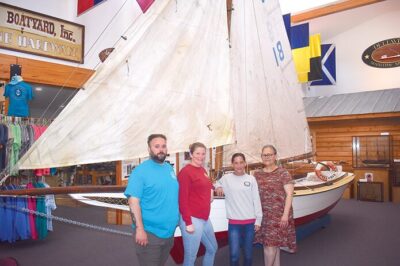
built by Carl Pederson in 1972 in Deltaville. They include, from left, Ni Bertrand, building and grounds
supervisor; Nicky Neal, administrative assistant; Kristen DeGraw, executive director; and Joye Burnett,
administrative assistant/volunteer manager. Photo by Larry Chowning
The construction of deadrise and cross-planked boats on the Chesapeake Bay started in the 1880s. Earlier experiments with the V-shaped cross-planked bottom style of construction had occurred in the North and Deep South on the Gulf of Mexico, but the style never became popular in those areas.
On the Chesapeake, however, water conditions, large, diverse inshore fisheries, availability of good wood for planks, and talented backyard builders all came together at the right time so that the deadrise style was perfected and spread throughout the bay region.
For more than a century, bay watermen and others revered this style of vessel. When other areas of the country had long since switched to fiberglass or steel-hull boats, the Chesapeake region was one of the last strongholds in America of wooden boat construction. In the 1980s and 90s, wooden boats were still the choice of many bay watermen and they came to Deltaville to Grover Lee Owens, Robert Green, Lewis Wright, Edward Harrow, Hugh Norris, and Willard Norris — who all laid keels and built deadrise boats into the 1980s.
The last of the original Deltaville boatbuilders was Willard Norris, who passed away on Jan. 7, 2021 — marking the end of a grand and dynamic cultural era of wooden boatbuilding in Deltaville.
The Deltaville Maritime Museum tells that history from start to finish.
Deltaville boatbuilding history
Elements of Deltaville boatbuilding likely came to Middlesex from the county across the Piankatank River — Mathews County. Mathews has a long history tied to the colonial shipbuilding industry.
But specifically, Basilee Cornelius and Ike Thomas are considered the fathers of modern Deltaville boatbuilding and contributed greatly to the rise of the business. Cornelius and Thomas started building round-bilged boats out of planks at the turn of the 20th century on Lovers Lane and as one old timer said, “everything gravitated to them.”
Around 1900, Cornelius and Thomas were building small “striker” boats for the Northern Neck menhaden fishery (a striker boat is a one-man skiff used to go out in front of the purse boats to direct schools of menhaden into a net) and push boats used to power sailing schooners when there was no wind to fill the sails. The boats were referred to as “frame boats” meaning they were round bilge, fore-and-aft planked and structurally connected with frames.
Cornelius and Thomas introduced planked construction and soon several men living on Lovers Lane got into the business, which evolved into V-bottom deadrise-style boatbuilding.
Through historical exhibits and the boatbuilding shop that churns out classic deadrise skiffs, the Deltaville Maritime Museum keeps Deltaville’s boatbuilding history alive.
Museum history
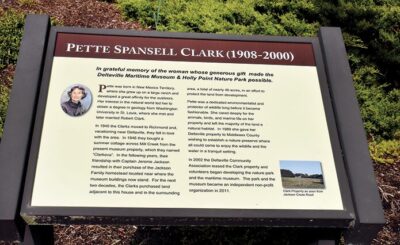
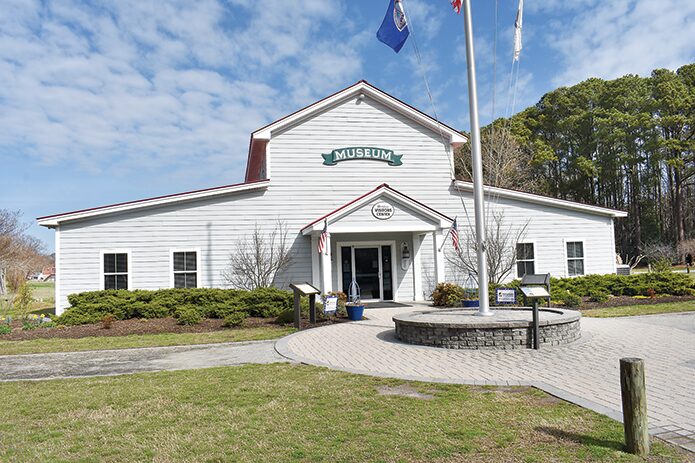
In 1989 the late Pette Spansell Clark willed 40 acres of land to Middlesex County. It is where the Deltaville Maritime Museum now sits. In 2002, the Deltaville Community Association (DCA) leased the Clark property from the county and volunteers began the task of building a nature park and a maritime museum.
Clark’s home on the property was used as a museum building and the volunteers began to develop the grounds and waterfront, which included a pavilion with historical boats and other artifacts.
A fire in July 2012 destroyed the museum building and the pavilion that housed the early 1900s, three-log bottom sailing canoe W.A. Johns, a gift to the Deltaville Museum from the Chesapeake Bay Maritime Museum in St. Michaels. The fire also destroyed an early sora hunting skiff built for the Segar family in Stormont in Middlesex County; and eight small skiffs being built by families during the annual Family Boatbuilding Week.
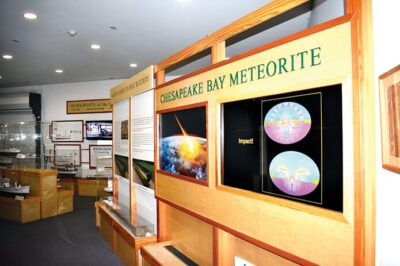
The fire destroyed the museum building and elaborate exhibits recently completed and largely funded through a donation from the late Jack Dozier. Fortunately, some of the donated artifacts in the building survived the fire and are today displayed in the new, modern museum facility.
What has risen from those ashes is a blessing to any and all who visit the museum. The new buildings, stage/pavilion and social hall/kitchen, docks and waterfront on Mill Creek, and amazing exhibits inside the museum are all a testimony to the strength and fortitude of the Deltaville community and the museum’s volunteers and staff.
Come summer, it’s boatbuilding time for families at DMM
The Deltaville Maritime Museum’s (DMM) 2026 annual Family Boatbuilding Week will be observed on June 22 through 27 from 10 a.m.-4 p.m. daily under the museum pavilion.
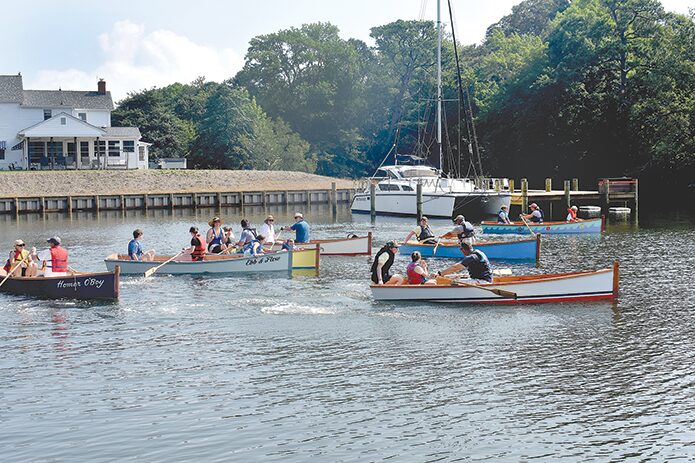
Families work together during the week to build a 14-foot skiff, similar to skiffs built by Deltaville boatbuilder John Wright. The skiffs are made of cypress and fir and held together with stainless steel fasteners. The museum provides assistance when needed.
On the last day, the builders come together at a starting line on Mill Creek, race up and back and the winning skiff has bragging rights as having built the fastest skiff.
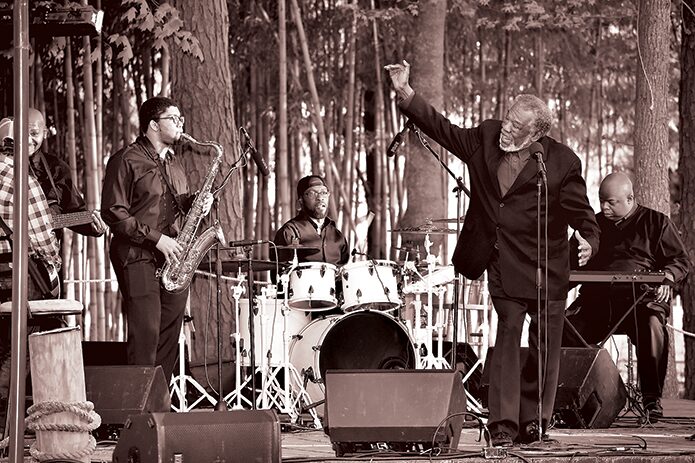
Groovin’ In The Park Concerts held April through September
A popular event at the museum from April to September is the Groovin’ In The Park Concerts. Concerts are held regularly on the museum grounds. Visit deltavillemuseum.com to view the concert schedule.
Deltaville Maritime Museum hours of operation
Deltaville Maritime Museum is open Monday, Tuesday, Thursday, Friday and Saturday from 10 a.m. to 4 p.m. and on Sunday from noon to 4 p.m. The museum is closed on Wednesdays and New Year’s, Thanksgiving and Christmas days. Admission to the museum’s main exhibit building is $5.
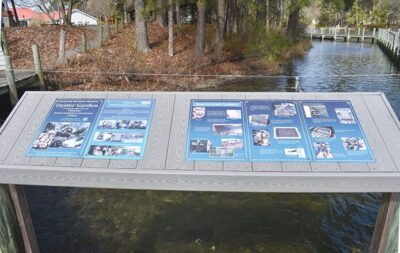
Holly Point Nature Park has a children’s garden, nature trail walk, kayak launch, picnic tables and a pier walk. The 1924 log hull F.D. Crockett is usually moored at the museum dock on Mill Creek, a tributary of Jackson Creek. The dock also features an exhibit on how to create an oyster garden through a display designed and built by the Tidewater Oyster Gardeners Association (TOGA). Holly Point Nature Park is open dawn to dusk daily on the campus of the Deltaville Maritime Museum.