

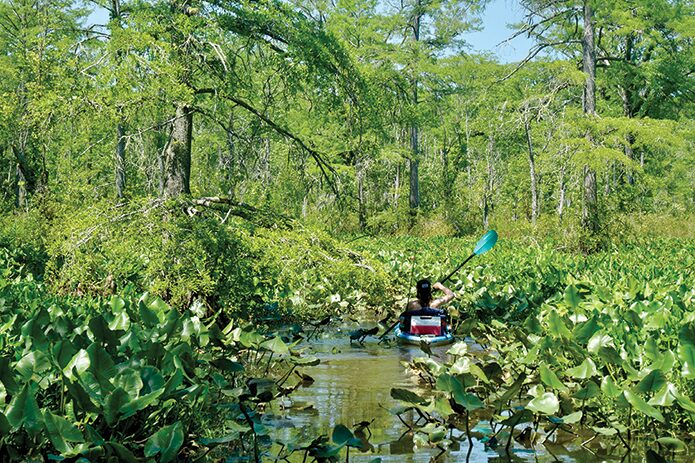
Spanning about 40 miles, traversing through four counties, the Dragon Run doesn’t ferociously roar—it hums a tune of tranquility and quietude, harmonized by the chirps and splashes of the fauna that inhabits its stream.
The Dragon Run was first documented in 1607 by Captain John Smith as he took account of the stream on his map while he explored the Powhatan Region. The pristine waters ultimately became the backdrop for the first full-scale armed insurrection in colonial America in 1676.
According to the National Park Service, during the upheaval of Bacon’s Rebellion, Pamunkey leader Cockacoeske led roughly 700 Indigenous people into the Dragon Run while Bacon and a force of 500 colonists were in hot pursuit to annihilate the Tribe.
Cockacoeke strategically evaded the rebel force by leading the tribe through the Dragon Run and constantly uprooting camp. Bacon’s army ultimately captured Cockacoeske’s nurse and forced her to take them to the Tribe. She purposefully led Bacon and his men astray to allow enough time for the Tribe to relocate and escape. Upon the realization of the nurse’s deception, she was killed, but her sacrifice helped secure the Pamunkey Tribe’s survival.
Later that year Bacon perished and the rebellion collapsed. Through Cockacoeske’s leadership and tactfully navigating and camping throughout the Dragon, the Tribe survived.
Despite its violent history, the Dragon Run’s landscape is now seen as a different kind of refuge. Untouched beauty, ancestral cypress trees and serene fauna and flora cohesively habituating with one another is today’s refuge along the Dragon.
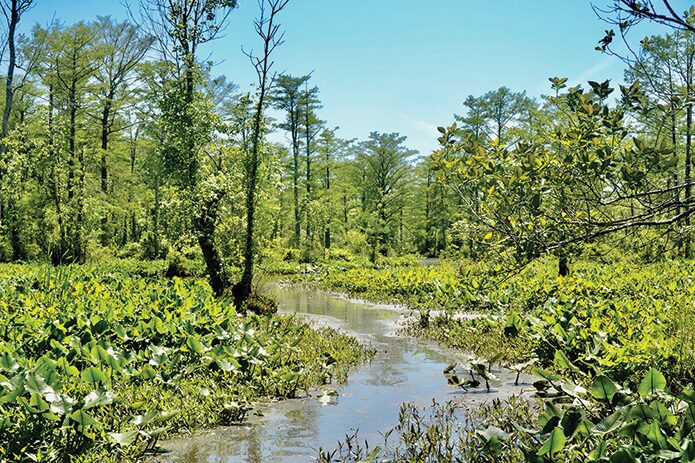
While how the Dragon Run got its name lacks concrete evidence, folklore suggests settlers called the swamp area the “Dragon” as a form of warning for the mystical “river of no return.” What is more likely, however, is the endless twist, turns, and bends of the waterway are reminiscent of a serpentine.
Like any dragon, however, the Dragon Run commands a certain level of respect that’s apparent from the moment an oar first cuts through its flowing waters.
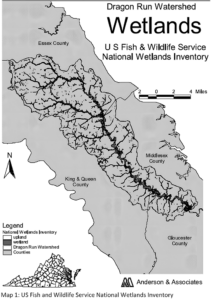
Despite the Dragon Run’s 90,000-acre watershed, access to the stream can feel somewhat limited.
About a quarter of the Dragon Run is permanently protected by organizations including Friends of Dragon Run and The Nature Conservancy, while much of the rest is privately owned.
 Friends of Dragon Run own and manage 1,818 acres of land along the Dragon, with several access points to experience the waterway.
There are 10 properties that Friends of Dragon Run own and manage. They offer small group guided trips during the spring. Their primary meeting site is at the Big Island Complex launch area in Shacklefords. Their network of volunteers and experts offer adventure seekers the utmost knowledge of what is seen along the roughly three-hour guided excursions.
However, for those who missed out on recent tour registrations, paddlers are welcome to explore the Dragon Run on their own time.
A popular point-to-point route flows downstream from Wares Bridge on Route 602, on the border of Middlesex and King & Queen counties to New Dragon Bridge on Route 603 in Mascot.
The premier strategy for the 5.16 mile paddle is to travel in two vehicles with a friend and leave one vehicle by the New Dragon Bridge in Mascot and launch the kayaks from Wares Bridge.
 In ideal conditions, exploring this stretch of pristine ecosystem will take paddlers around five hours or so to complete, dependent upon pace and natural obstructions.
Beaver dams, low tides and tall grasses can all present challenges for paddlers working their way down stream. This spring, however, the harsh drought the region has experienced made the trip unable to complete for many due to the low water levels and heightened grasses.
It’s critical to keep safety as a priority when working your way through the Dragon, not just for yourself, but for the ecosystem surrounding you. If water levels are too dry and low, it’s important to respect the conditions and turn around, and try the trek again when conditions are better.
Even if the path is unnavigable, the day is far from lost. The acreage of accessible stream is still incredible, and several hours can easily slip away as you bask in the sunshine absorbing the diverse wild life surounding you.
A bird watcher’s paradise, a keen eye can spot bald eagles, barred owls, red-bellied woodpeckers, Carolina chickadees, yellow-throated vireos, egrets and other fowl. According to the Department of Wildlife Resources, 126 species of birds have been reported along the Dragon to date.
Anglers also can enjoy a day of reeling in a variety of species, like catfish, largemouth and striped bass, white perch, bowfin, hickory shad, sunfish and up to 50 other fish.
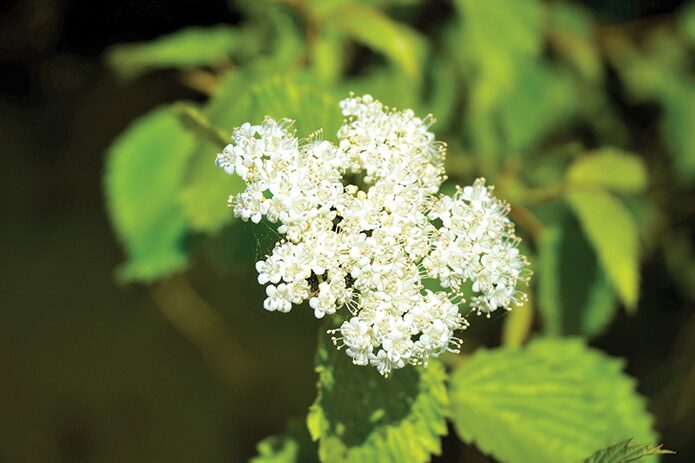
By the numbers, the variety of flora is impressive beyond comprehension. Harboring over 800 species of native plants, dominated by bald cypress trees and water tupelo, photographers need not to fear they’ll miss out on fleeting beauty; it’s fully encompassing at every cut of a paddle.
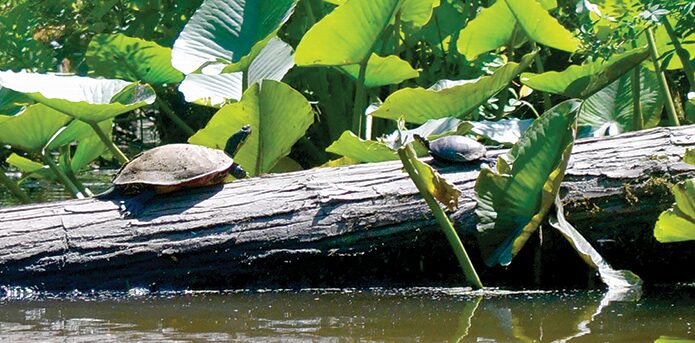
Visitors can almost guarantee a sweet surprise from residents of the Dragon Run, including endangered monarch butterflies, snapping turtles, and of course North American beavers that often create dams along the waterway. The Dragon Run also is home to several species of venomous and non-venomous snakes, including the Northern watersnake.
Immersion along the Dragon Run for a day can transcend paddlers into an environmental oasis, making it easy to forget about the hustle and bustle of daily life. It’s easy to connect with the Earth when completely surrounded by enchanting green waters and vegetation from all angles. The Dragon Run is not just an escape, but an incredibly important facet to the greater ecosystem.
The Smithsonian Institution deemed the Dragon Run the second most ecologically significant area out of 232 in the Chesapeake Bay watershed, and the first within the state of Virginia.
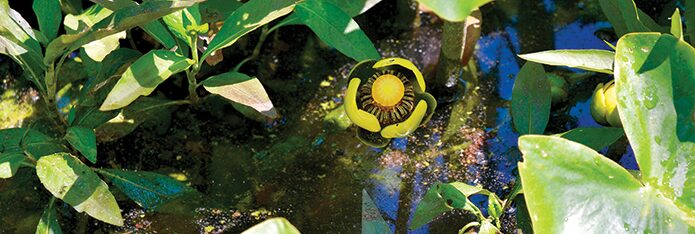
Mostly untouched by development, the 40 acres of wild stream which feeds into the Piankatank River serves as sanctuary for vulnerable, endangered and critical species of vegetation, fish and other living organisms.
Organizations like Friends of Dragon Run and Chesapeake Conservancy rely on dedicated volunteers to preserve the wild and untouched waterways. Through land stewardship, education, and monitoring, these groups are dedicated to preserving what has long served as a critical geography amongst our region. It’s the duty of us all to respect and cherish something that remains so pure and natural in a world that’s seemingly constantly leaving nature in the dust.
Today, The Dragon Run endures, not as a relic of the past, but as a living current of memory and wonder. Its waters still wind quietly beneath towering cypress limbs, carrying with them the echoes of those who once sought refuge along its banks and the countless forms of life that continue to thrive within its tides. Every paddle stroke through the Dragon is a reminder that some places are meant not to be conquered, but respected; not hurried through, but listened to. In a world increasingly shaped by noise and development, the Dragon Run remains beautifully untamed. A sanctuary where history breathes lives on through the trees, where wildlife flourishes in hidden stillness, and where the soul can drift, if only for a moment.
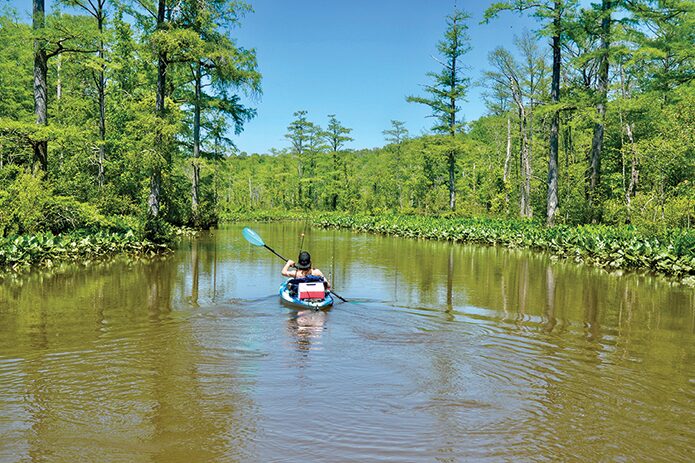
Launch Points:
- US-17 Bridge. Located along the Gloucester/Middlesex County line, this is a popular launch spot with a break in the guardrail on the right side of Route 17 North, just over the bridge.
- Browne Tract. In Essex County, located off Byrds Bridge Road, it offers a single-vehicle access point.
- Mascot. In King & Queen County, this launch point is right beside the New Dragon Bridge and is also beside the Dragon Run Nature Trail.
- Big Island. The Friends of Dragon Run launch site is roughly at 558 Piedmont Road, Shacklefords.
- Wares Bridge. Located between Middlesex and King & Queen counties at the Route 602 Bridge on Wares Church Road. Very limited parking near the bridge.