

 While we celebrate the birth of our nation, it is sometimes easy to forget what an impossible task gaining independence was. It was a road paved with rebellion and resistance, traveled by men and women who risked it all for life, liberty and the pursuit of happiness.
 While we celebrate the birth of our nation, it is sometimes easy to forget what an impossible task gaining independence was. It was a road paved with rebellion and resistance, traveled by men and women who risked it all for life, liberty and the pursuit of happiness.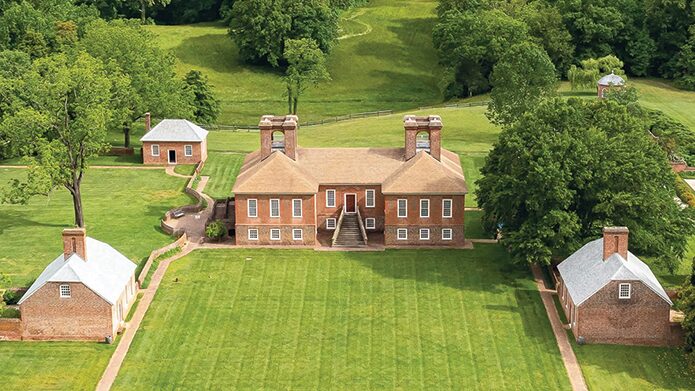
Virginia’s roots of rebellion
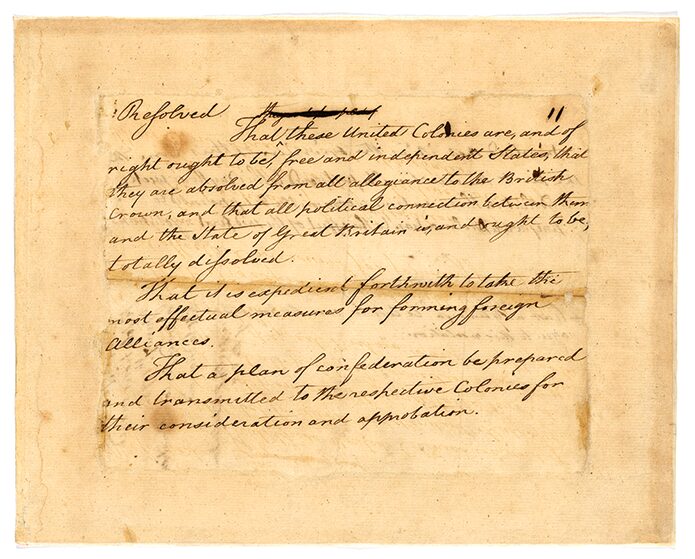
Before many picked up arms in rebellion, some picked up a pen. Richard Henry Lee (1732-1794), fourth generation of the influential Lee family of Virginia, is a name connected to many significant events of the time, but not one that is well known. Lee was president of the Continental Congress, a signer of the Declaration of Independence along with his brother Francis Lightfoot Lee, and later a U.S. Senator. But before all that, he was the author of The Resolution for Independence, also referred to as the Lee Resolution.
“If you look at our early history, it was written by several people, prominent amongst them would be John Adams, Thomas Jefferson, etc. These guys wrote voluminously and were very concerned about what history would think of them,” said historical interpreter Frank Megargee, who has been portraying Lee for the past 20 years at both Colonial Williamsburg and Stratford Hall. “Lee, I don’t think, was ever concerned with any of that at all. He always lived in the moment and so he just wanted to be sure that the goals for the making of a new nation occurred, rather than who got credit for it.”
The driving force
Lee spent his early years at Stratford Hall before being sent to England at age 16 to complete his formal education and returned in 1753 after the death of his parents. In the lead up to the Revolutionary War, Lee was appointed justice of the peace in Westmoreland County and elected to the House of Burgesses. In 1766, he also authored the Leedstown Resolutions in resistance of the Stamp Act, a full decade before declaring a break with Great Britain.
“He was clearly the driving force behind the revolutionary movement in Virginia,” Megargee said. And Virginia would be the driving force in pushing for independence.
Before the declaration
Before July 4 and the signing of the Declaration of Independence, the Lee Resolution formally proposed independence to Congress. It began in May, with Virginia Convention delegates agreeing to push for independence during the Second Continental Congress. When they met in June, Lee presented a resolution that declared independence from Great Britain, sought alliances with other governments and established a confederation for the colonies to approve. Not all delegates were in agreement though. It took until July 2 for 12 colonies to agree, while New York abstained.
Virginia Resolved
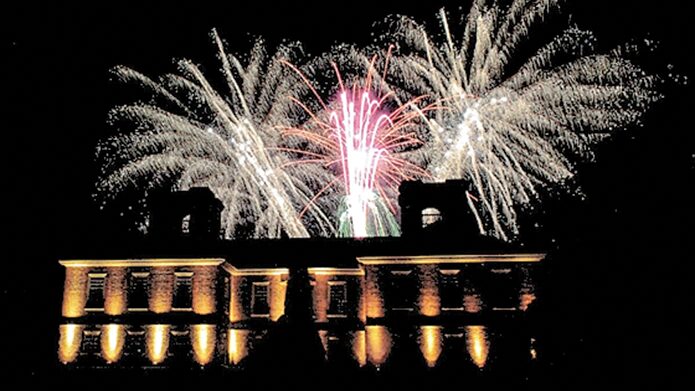
Stratford Hall will celebrate this milestone with America Resolved, a two-day event recognizing Lee and his contributions. On June 6, the VA250 Mobile Museum will visit along with music, food trucks, beer and wine sales. The U.S. Navy Concert Band will perform and Richard Henry Lee will speak about his Resolution for Independence.
“I’ll give about a four minute speech, basically on the notion of the fallacy of monarchy and the idea that sovereignty should lay with the people, not with the king,” Megargee said
Keynote speaker Carly Fiorina, the Virginia American Revolution 250 Commission national honorary chairman, also will offer remarks. “Richard Henry Lee’s Resolution for Independence helped set a nation in motion. Two hundred and fifty years later, Virginia remains the place where that story began—and where it continues,” said Fiorina. The evening will close out with a finale of fireworks.
Living History
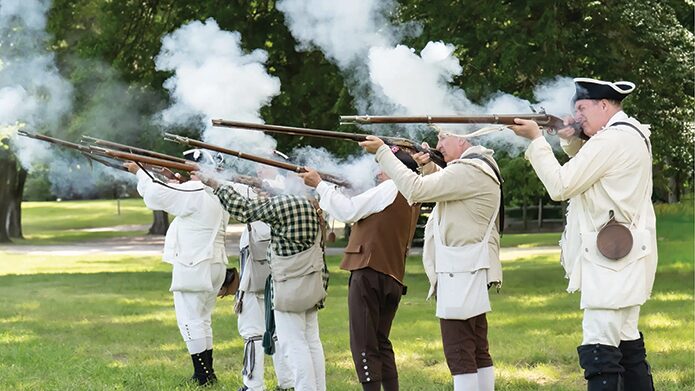
The celebration will continue the following day with a living history program. A citizenship ceremony, drills by the 1st and 4th Continental Light Dragoon Cavalry, and demonstrations by the Sons of the American Revolution, the Patawomeck and others will take place on the grounds.
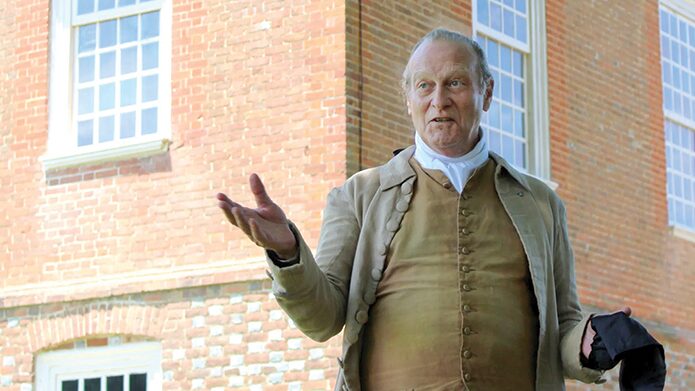
The event also will include discussions with Richard Henry Lee and his sister Hannah Lee. “She was quite a character herself. There’s a letter that exists, that was from R.H. to her in response to one that she sent, which no longer exists. Basically she was saying, you guys said no taxation without representation, yet here I am a widow with a large estate. I’m subject to taxes, but I have no voice to my own government. Why? What about us?” Megargee said. “R.H. often gets a little full of himself, and she has a very strong ability to bring him back to Earth.”
A Founding Father’s relevance to today
With 250 years passing since the resolution and 20 years of portraying the man, what does Megargee think of Lee? “He was somebody who was like a lightning rod. Some people really loved him to death, and some people couldn’t stand him. There were political factions—one was the sort of the very old families of Virginia who were down around the James River and the Tidewater area. And then R.H., of course, is on the Northern Neck. And then you have the Piedmont, where Patrick Henry is. It was basically an alliance between the Northern Neck and the Piedmont against the Tidewater Dandies, as they called them, and that never went away, and still hasn’t gone away.”
“My role as an interpreter is not to put my spin on it, but rather to present, as closely as I can, to the way this person actually was. I think they deserve that.” As a history buff, Megargee has extensively studied the Virginia Lees, so much so, “that when I’m Lee, I’m Lee.” He admires his gift of oration and his ability to “never take political fights personally. Benjamin Harrison is an absolute political enemy, but there’s no guy that Lee would rather go have a drink with because he cracks him up.”
Reflection
Are there messages that Megargee hopes people take away from and reflect on 250 years later? “The parallels today are everywhere, and as an interpreter, I never mention them directly. I’m going to let people draw their own conclusions. But to me, if you look at that period, it absolutely has parallels to today in our current situation. It is different in many respects, but the same in many others. Maybe it’s because people are people, and that throughout history doesn’t change.”
“Lee wanted to see us create a nation that was different from any nation that ever came before and that would be a beacon to the world. What Lee saw in history was man’s inhumanity to man. He wanted that we would create an alternative governance where the state would not treat the people as if they’re their servants or slaves, but rather as the rulers of themselves.”
Before you go
America’s Semiquincentennial—roughly means half of 500 in Latin—and Virginia Resolved both provide a great opportunity to experience history at Stratford Hall Historic Preserve, 438 Great House Road, Stratford.
Schedule:
- Saturday, June 6, an evening of free events beginning at 6 p.m. RSVP requested.
- Sunday, June 7, a full day of historical events beginning at 10 a.m. Tickets required, $15 ages 14 and up; $10 ages 6-13; free for ages 5 and younger.