

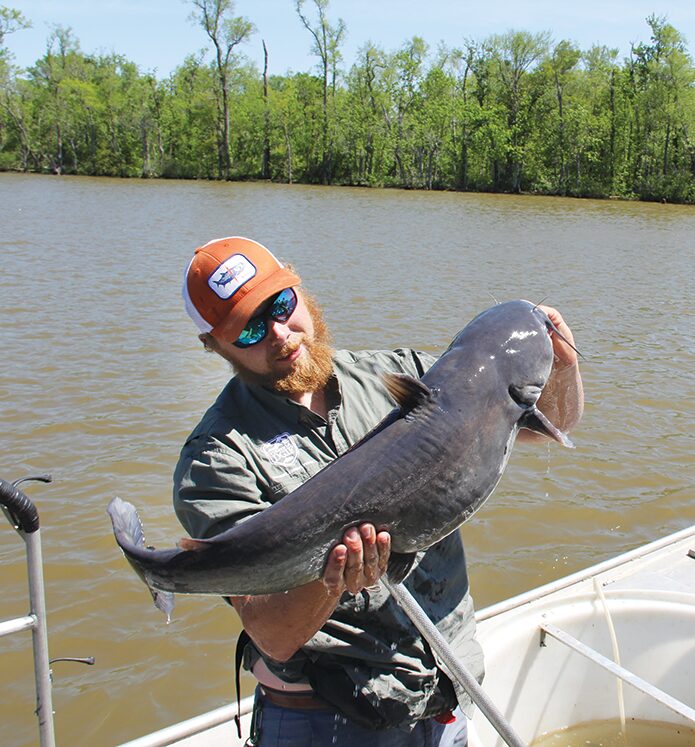
Blue catfish are one of the most invasive fish in Chesapeake Bay — but they can be good to eat and fun to catch.
During the 1970s and 80s blue catfish were introduced to the James, Rappahannock and York river basins on Chesapeake Bay as a new recreational fish by the Virginia Department of Wildlife Resources (DWR). Blue cats are native to Mississippi, Ohio, Missouri and Rio Grande river basins. The fish have been stocked for fishing in 20 states.
The Virginia blue catfish have spread throughout the bay’s watershed into nearly every major tributary and are now being seen in North Carolina waters too. Blue catfish eat shad, herring, striped bass, menhaden, clams and blue crabs and there is now a concern that the large catfish population is having a detrimental impact on the populations of these other species.
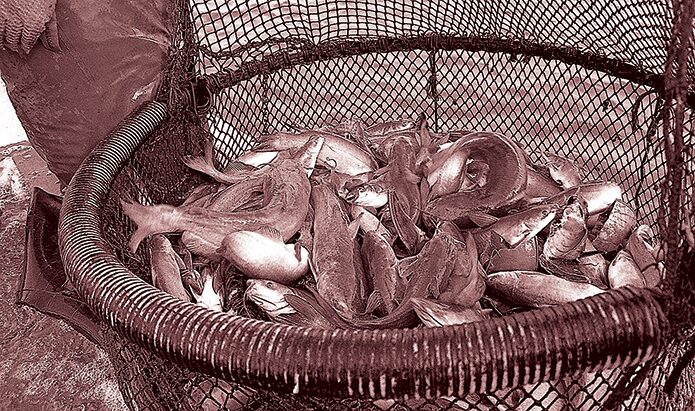
The problem began as many do, with good intentions. In 1974, striped bass stocks were declining and Virginia sought to provide a new species for anglers to catch.
Chester E. Phelps, then executive director of the Virginia Department of Game and Inland Fisheries, oversaw the introduction of 300,000 blue catfish into the James River.
Virginia Del. Keith Hodges, R-Urbanna, who has been a key proponent in introducing legislature to control the fish and to create a commercial blue catfish fishery said, “Virginia rivers were stocked with blue catfish to create this large trophy fish. The state record is currently 143 pounds.
“There are now over one hundred million of the fish in our waters today extending from fresh, brackish and they have become more saltwater tolerant,” said Hodges. “They eat basically everything from rockfish eggs — they can swallow 400,000 rockfish eggs . . . in a single gulp,” he said.
“They eat shad, menhaden, rockfish and crabs. In just a five-mile stretch on James River, a VIMS (Virginia Institute of Marine Science) study shows they ate 2 million crabs, so you can see how devastating they are to our bay and fisheries.”
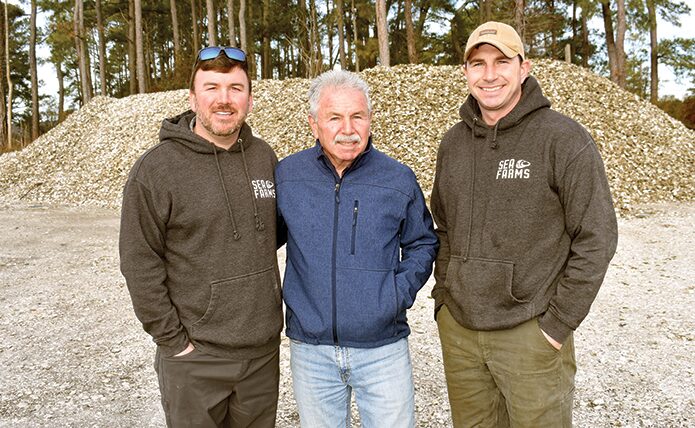
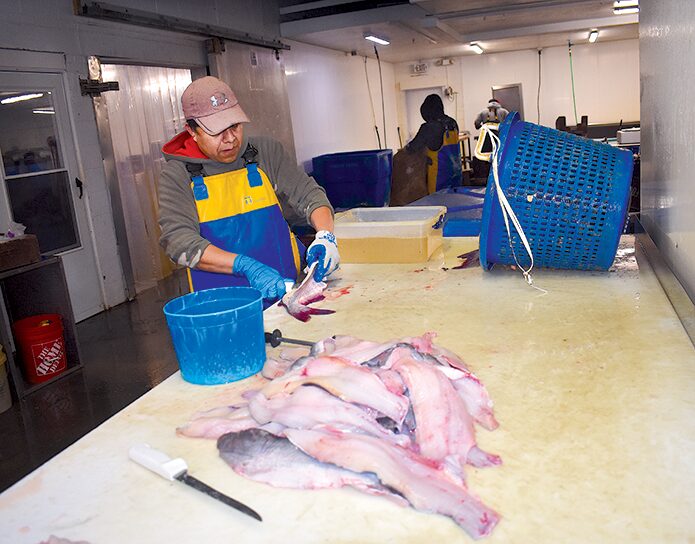
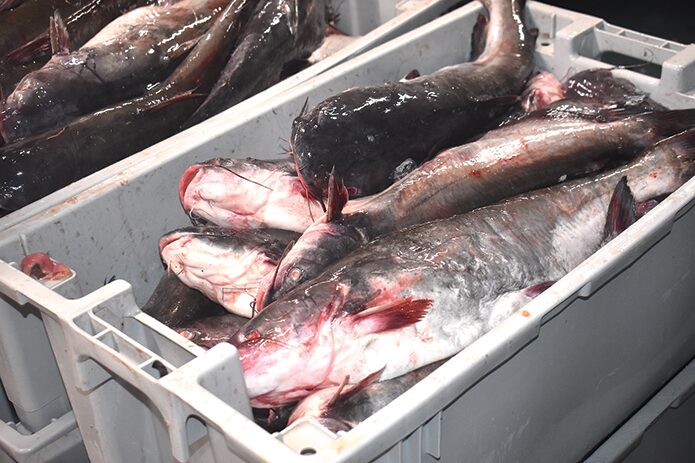
State legislators have recently awarded two $250,000 reimbursable grants to two of the bay’s catfish processing firms. Sea Farms of Hayes and L.D. Amory Seafood Company in Hampton have received these funds to beef up their catfish processing, flash freezing and infrastructure.
“These grants will help our local watermen too,” said Hodges. “The watermen’s catch has been limited to processing availability. We are hopeful that increased processing and marketing of the fish will provide more dollars for our watermen and less blue catfish in the bay.”
Recreational fishing
The state is also encouraging the recreational harvest of catfish. Alex McCrickard of Virginia DWR said the fish are highly abundant in the tidal river system, easy to catch using a rod and reel and a lot of fun to catch on light tackle. “By catching and filleting, you can help mitigate their negative impacts,” he said.
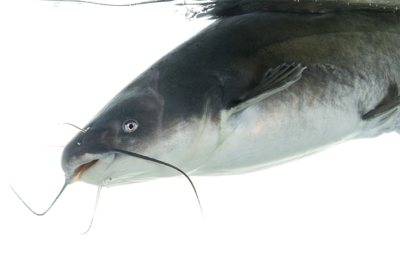 When in a boat, the channel edge is where fish school up in a river or creek and a great place to “soak bait” for catfish,” said McCrickard. “A downed tree hanging over the water is also a good place to prospect for catfish. They can also be caught off fishing piers.”
McCrickard said one of the best bait is cut bait — gizzard shad, or menhaden, and scented catfish bait — bloody chicken or the chicken liver variety is good, so are night crawlers on a small circle hook. Eighteen- to 20-inch fish are a perfect size for fillets. “Blue catfish have white, flaky meat with a mild flavor which makes them quite versatile in the kitchen,” he said.
Where to catch locally
Blue catfish are abundant in the headwaters of creeks along the Rappahannock, Potomac, James and York rivers. Mark Bray of Hartfield is an avid hook-and-line blue catfish fisherman who has found the introduction of the blue catfish into local waters in 1970s to have provided good fishing and good cuisine.
“I enjoy catching them and they are really good to eat,” said Bray. “I primarily use squid or peeler (crab) for bait. They really like a crab, but I think they will bite on most any cut bait.”
Bray often fishes the headwaters of Lagrange Creek on the Rappahannock River. “The first time I saw a blue catfish was in the 1970s when Grant Bagby started catching them in the creek. I remember catching mud catfish in the 1960s, but the blue catfish is a lot bigger than our native mud cats and much better to eat.
“One of my best days fishing was on the Mattaponi River,” he said. “The wind started blowing so we took the boat in closer to shore near where some trees had fallen down over the water. We fished in that area and caught a good mess.
“I really enjoy eating the fish. The meat is flaky and white. I fillet the fish, dip the fillet down into an egg and cornmeal batter — sometimes I use Louisiana fish fry with the batter — fry them up in a black iron frying pan until it is golden brown,” said Bray.
“Boy, that is good eating! I think when I get off the phone with you I’m going to the freezer and get me one to fry up!”
Finally, a fishing license is required to catch blue catfish in Virginia. Depending on where you are fishing, you will need either a freshwater fishing license from DWR or a saltwater fishing license from the Virginia Marine Resources Commission (VMRC).
Bray carries both on him as blue catfish can be caught in fresh and salt waters. “If you are going after them hard, you need to carry both fresh and saltwater licenses,” he said.
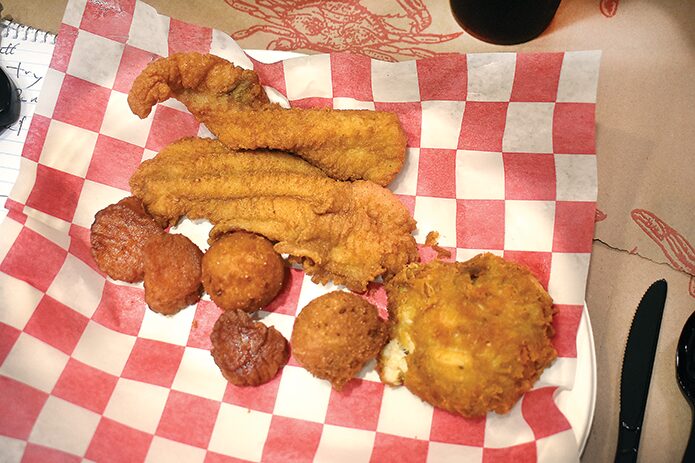
Try these recipes for blue catfish
Blue catfish caught from Chesapeake Bay region is often compared to striped bass in taste and texture. Unlike other types of catfish, blue catfish are not bottom feeders. This eliminates a muddy taste.
Catfish fillets are tender, white fish that can be cooked in a variety of ways to create a delicious meal. Recipes abound as blue catfish meat is smoked, made into tacos, used as the main ingredient in potato-parmesan and smoked fish omelets, catfish cakes, catfish dip, and the list goes on.
Virginia and Maryland state agencies are encouraging, marketing and cooking of blue cats to help establish a commercial fishery to bring down the catfish population in these two states.
The Virginia Department of Agriculture and Customer Service (VDACS) International Marketing Division has sponsored seafood promotional events bringing international chefs, food critics and writers to visit blue catfish processing plants in Virginia to encourage the international marketing of Chesapeake Bay blue cats.
Maryland annually conducts the “Chesapeake Catfish Cook-off” in June at the Annapolis Maritime Museum & Park, bringing in top chefs to prepare creative dishes using invasive blue catfish as a way to promote the tasty use of the fish.
Fried catfish fillets
- The batter and seasonings are made from buttermilk, cornmeal, frying oil, use a high heat oil like canola, vegetable or peanut oil heated to around 350 degrees. Add in cayenne pepper, salt and pepper, a little fresh lemon juice or a splash of Louisiana Hot Sauce for finishing touches. Fry to light and crispy.
Smoked catfish
- Ingredients — Four fillets rinsed and patted dry, marinate/brine.
- For the marinade: 1/2 c. olive oil, 3 Tbsp. honey and 1/2 Tbsp. red wine vinegar; seasoning rub, 2 tsp. chili powder, 2 tsp. smoked paprika, 1 tsp. garlic powder and kosher salt to taste.
- Instructions — Whisk the marinade ingredients together. Submerge the catfish fillets in the marinate and refrigerate for at least four hours. Remove the fish from the marinade and pat dry. Place on a wire rack and let chill uncovered in the fridge for one to two hours to allow a tacky surface to form, which helps the smoke adhere. Rub fish with seasoning blend. Preheat smoker to 225 degrees on the indirect heat side and smoke for 45 minutes to one hour, or until the internal temperature reaches 145 degrees and the meat flakes easily.
Broiled catfish
- Ingredients — Two to four catfish fillets (five to seven oz. each), 1 tsp. olive oil, 1 tsp. creole seasoning (for a mix of garlic powder, paprika and seasoned salt, 1/2 tsp. black pepper, and lemon wedges for serving).
- Instructions — Position an oven rack about four inches from broiler element and preheat broiler on high.
- Season — line a baking sheet with aluminum foil and coat it with non-stick cooking spray. Pat catfish fillets completely dry and brush both sides lightly with olive oil.
- Spice — combine creole seasoning and black pepper. Sprinkle half of the mixture evenly over the top of the fish
- First broil — place the baking sheet under the broiler for about five minutes until the top begins to brown.
- Flip and finish — carefully flip the fillets, season the other side, and broil for another three to five minutes, or until the fish is opaque and flakes easier at its thickest point.
- Serve — squeeze fresh lemon juice over the top and serve immediately.