


July on the Chesapeake Bay can be hot, but for an angler, the bay breeze and great fishing is pure heaven. The bay and rivers are alive with a variety of hard-fighting and great-tasting fish.
This month, the playing field stretches from the brackish expanses of the feeder creeks out to the Chesapeake Bay itself. Good action can be found as far north as the Potomac River all the way down to the high-salinity waters around the Chesapeake Bay Bridge-Tunnel (CBBT). Grab your polarized sunglasses, load up the boat, and let’s look at what is biting across the bay this month.
 Cobia, the brown torpedos of the bay, are exciting if you are looking for a true test of heavy tackle. Late June and July offer good opportunities for these fish. These powerful predators travel up from the ocean and settle into the warm, salty waters of the mid and lower Bay. The stretch from Smith Point down to the CBBT is prime territory, yet in recent years, the lower Rappahannock and Potomac rivers have held their fair share as well.
Sight-casting the shallows and buoys on calm, bluebird days can be very productive. Cobia love to bask right at the surface to regulate their body temperature. Cruise the channel edges and contour lines at a slow speed and look for large, dark shapes that resemble sharks. When you spot one, cast a large, brightly colored 1.5 to 2-ounce bucktail jig—pink, white, and chartreuse are local favorites—or a live eel directly into its path.
You may also anchor near historical structural magnets like the Southwest Middle Grounds, Windmill Point bar, Smith Point Light or Wolf Trap Light and many other varied changes in the contour lines along the drop-offs. Establish a menhaden chum line to draw them in. Live eels, spot and chunks of menhaden will entice bites. Each angler is allowed one fish per day over 43” with a two per boat max.
“Fun fish fact”—cobia are famously curious and lack a swim bladder, meaning they must stay in constant motion or rest on structural elements—like buoy chains and shipwrecks—to keep from sinking to the bottom.
Spanish mackerel and bluefish offer fast-paced, rod-bending action when schools of Spanish mackerel and “Taylor” bluefish are tearing through baitfish along the main shipping channels in the middle bay area. The biggest mistake anglers make with Spanish mackerel is trolling too slowly. These fish are built for lightning-fast bursts. Keep your boat moving at a brisk 5-7 knots instead of the standard 4-5 knots for bluefish. The best setup for both species is relatively simple. Use small, flashy #0 or #1 Clarkspoons, Drone or similar spoons tied to long 20-pound fluorocarbon leaders behind inline weights or small planers to get your presentation down into the strike zone. The larger 4-8 pound bluefish, when found, require a larger bait such as a 12” artificial eel.
If diving terns and gulls are located that indicates that mackerel and bluefish have driven a school of bay anchovies to the surface. Drive around the school and only let your lines go through the fish to prevent spooking them. Mackerel creel limits remain at 15 per person each day and bluefish were raised to five fish per person each day.
“Fun fish fact”—Spanish mackerel can swim at speeds approaching 30 miles per hour, which is why your standard trolling speed simply won’t trigger a bite from them.
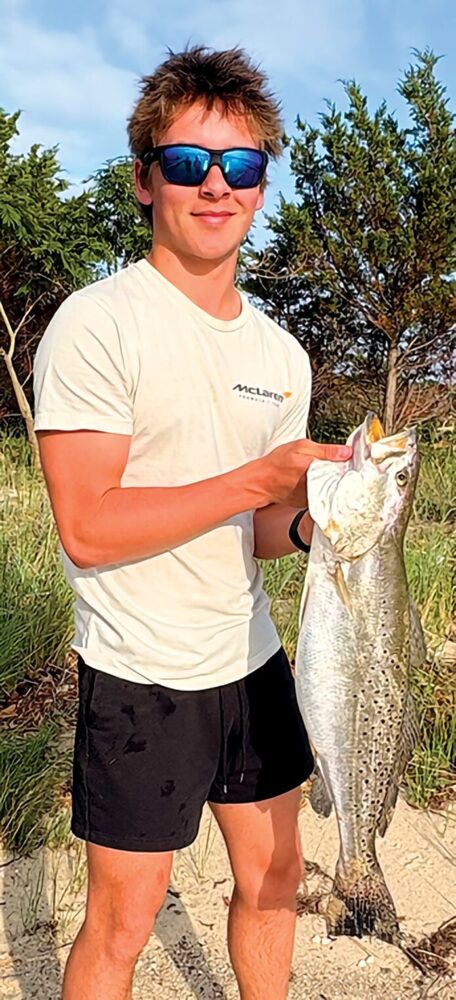
Red drum and speckled trout are some of the most sought after species by both inshore and bay fishermen. July brings fantastic opportunities for beautiful speckled trout and red drum—both legal puppy drum and massive, citation-sized “bull” reds that must be released.
Bull reds are typically found in huge schools, as the large adult red drum congregate in around structure, such as grassy bottoms but mainly changes in the depth. Dropping a soft crab or a large piece of cut menhaden into the deeper holes around the structure is a surefire way to hook into a fish that can easily top 40 pounds. Also, jigging and trolling produce great results.
Puppy drum and trout can be found in the tributaries. If you prefer light-tackle fishing in calmer waters, target the shallow grass flats and marsh edges near the mouths of the Rappahannock and Great Wicomico rivers. Capitalize on the cooler water of early morning and late evening by casting topwater plugs or paddle-tail soft plastics on a 1/4-ounce jig head.
“Fun fish fact”—Red drum get their name from the loud drumming sound males produce during the summer spawning season by vibrating special muscles against their air bladders.
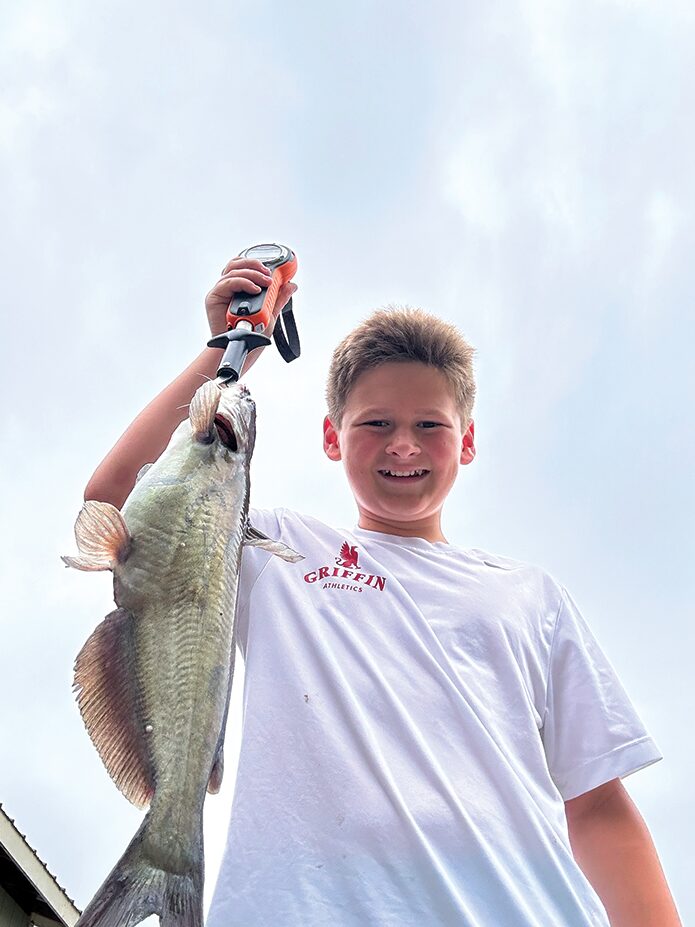
Bottom fishing is always an option for a relaxed day on the water that keeps the kids entertained. We are seeing an influx of panfish like spot, croaker and whiting. Top spots include the oyster grounds around the Rappahannock River, the Great Wicomico and the mouths of local creeks.
Whether you are sight-casting for monster cobia or watching a youngster catch their very first spot, I encourage you to make memories that outlast the summer heat.
Until next month, tie your knots tight, watch the weather, and fair winds!
Get Cookin’: Capt. Billy’s Garlic-Herb Grilled Cobia
Cobia has a firm, steak-like texture and a mild flavor that makes it a favorite for the summer grill. Because it holds its shape perfectly, you do not have to worry about it flaking apart into the coals. Here is a simple, foolproof recipe that will be a hit at any backyard gathering.
Ingredients:
- 4 cobia steaks or thick fillets (about 1 inch thick)
- 4 tablespoons melted butter
- 2 tablespoons olive oil
- 3 cloves garlic, minced
- 1 tablespoon fresh lemon juice
- 1 teaspoon dried oregano or thyme
- Salt and freshly cracked black pepper to taste
Instructions:
- Preheat your grill to medium-high heat (around 400°F) and oil the grates well to prevent any sticking.
- Whisk together the melted butter, olive oil, minced garlic, lemon juice, and herbs in a small bowl.
- Pat the cobia fish dry with paper towels. Season both sides generously with salt and pepper, then brush the garlic-butter mixture over the fish.
- Grill the fish for about 4 to 5 minutes on the first side. Carefully flip the fillets using a wide spatula, brush with any remaining butter mixture, and grill for another 4 minutes.
- Remove from the heat once the flesh turns opaque and flakes easily with a fork in the thickest part. Serve immediately with fresh lemon wedges and your favorite summer sides.