
As we reflect on our country’s 250 birthday milestone, we are reminded of the historical roots that run deep throughout our coverage area. The Northern Neck is often referred to as the “Birthplace of the Nation” as the birthplace of three of the first five U.S. Presidents: George Washington, James Madison and James Monroe. During this Rivah season, we are highlighting a few of the sites, volunteers and crafters who help bring history to life.
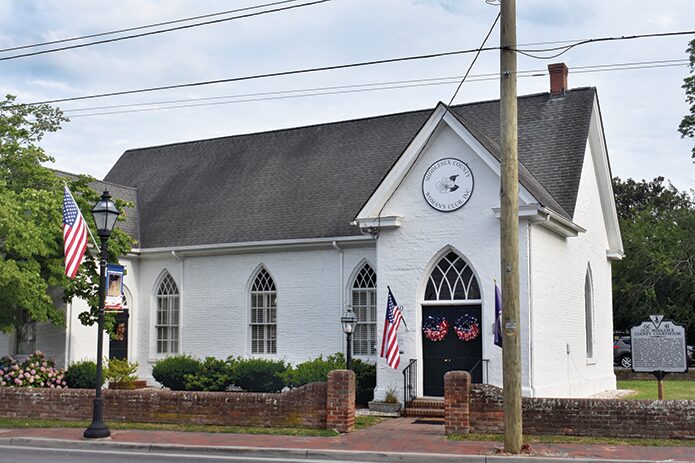
Perhaps the most historic colonial building in Middlesex County is the old Middlesex County Courthouse building, known today as the Middlesex County Woman’s Club building in Urbanna.
The county seat was moved in 1748 from Stormont to Urbanna and the building was built and served as the courthouse throughout the Revolutionary War period, until when, via a countywide referendum, it was moved to Saluda in 1852.
During the revolutionary period, the Middlesex County Committee of Safety met in the building. The committee of safety served as the de facto government and local guardians of the Patriot cause during the Revolutionary War period. They enforced trade boycotts, managed local militias, punished loyalists and effectively replaced royal authority.
Most everything concerning legality or enforcement of the Patriotic cause surrounding Middlesex County’s involvement in the Revolutionary War passed through the doors of the Urbanna courthouse building.
The Pre-Revolutionary decades would bring significant change to Virginia and Middlesex County. Generally, historians consider the Revolutionary War as primarily a “national” war for independence. Middlesex County’s records of those times, however, reveal there were also deep divisions going on within this local community, as well. Although the local Scottish merchants and the large landholders in the county were very much for keeping the status quo and remaining a colony of England, the county, with its emerging smaller planters and fledgling middle class, had established a strong and active Committee of Safety to promote and direct locally this national movement for independence.
The Revolution and the decline of tobacco brought about socio-economic change, as well as a political shift of power. Descendants of these small planters and middle class citizens would rise to become the movers and makers of Middlesex and an important part of a new, vibrant nation. Middlesex County’s Committee of Safety was led by James Montague and Edmund Berkeley, elected representatives representing Middlesex in the Virginia Assembly.
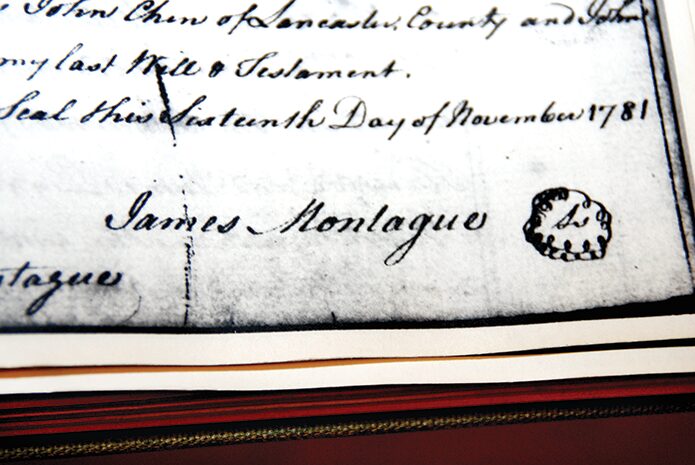
It was at the courthouse in Urbanna where the Middlesex Resolutions and the county’s first countywide public demonstration of rebellion took place. In May 1774, Virginia’s Governor Lord Dunmore dissolved the House of Burgesses after the group adopted a resolution calling for the first day of June to be set aside as a day of prayer to ask for “Divine Interposition for averting the heavy calamity, which threatens destruction to our civil rights.” Dunmore was offended by the wording.
The next day, on May 27, 1774, Montague and Berkeley were two of the 89 burgesses who met in the Apollo Room of Raleigh Tavern in Williamsburg and signed yet another “Association” to boycott British trade.
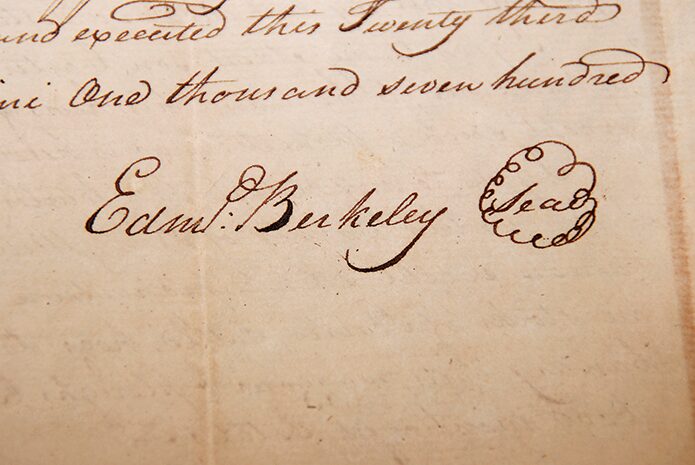
On May 30, 25 burgesses met in Williamsburg and called for, and later attended, the first Virginia Convention. Middlesex’s Edmund Berkeley was one of those 25 burgesses to sign. Peyton Randolph, George Washington, Thomas Jefferson, and Francis Lightfoot Lee were some of the more famous signers of this resolution.
It was Montague and Berkeley who brought the news home to the Middlesex people and, most likely, encouraged a meeting at the county courthouse in Urbanna on July 15, 1774. The meeting was part of a colony-wide movement to have each county draft resolutions denouncing British taxation of the colony and to elect representatives for an August convention in Williamsburg that would elect representatives to the First Continental Congress.
Sitting up front in the courthouse in Urbanna on that day were members of the old gentry class and the wealthy Scottish merchants of the town. These folks were most certainly very cautious of radical attitudes toward Britain.
The courthouse and grounds were most likely filled as freeholders (male landowners) and others of all status crowded into the building. Surely there was debate on both sides, but at the end of the day the majority of male freeholders voted to join in the movement to denounce England’s policy of “taxation without representation.”
Middlesex Resolutions
“After the freeholders of the county of Middlesex had proceeded in the most decent and orderly manner, to the election of representatives for the county, on the 15th of July, they were summoned to meet at the courthouse to take into their consideration the present state of the colony, and America in general; and upon mature deliberation many of the most respectable of the Freeholders and inhabitants of the county being present, they entered into the following Resolutions,” stated Virginia General Assembly records.
There were eight resolutions drafted by Middlesex citizens to address British actions against the Boston community after the Boston Tea Party. The fourth resolution states, “that the late Act of Parliament suspending the trade and shutting up the port of the town of Boston, is an alarming circumstance to the Colonies in general, in as much as it marks out a settled plan in the British Parliament to enforce submission to their power of taxation.”
Middlesex’s resolution makes it clear that the duty on tea is a tax.
“That the act imposing a duty on tea, for the avowed purpose of revenue, is a tax; and that every opposition should be expressed that may move to the repeal of the said act.”
The resolution also reflects hope that there can be a non-violent solution. “That we do not approve of the conduct of the people of Boston in destroying the tea belonging to the East India Company; and not withstanding the tax on tea must be esteemed as a violent infringement of one of the fundamental privileges of loyal and free subjects; yet we apprehend violence can not justify violence; reason and policy reclaim against it.”
Instead of violence, the freeholders of Middlesex recommended not using tea. “A desistance from the consumption of tea, and a confidence in the virtue of our countrymen, whose sense of the spirit of the law will no doubt include a total disuse of it, are a much eligible means, and more probably will work a repeal of this Act, than disorders, outrages and tumult.”
Middlesex citizens were loud and clear on the issue of taxation without representation. “On the question of the supremacy of Parliament to tax the colony, that it be the opinion of this meeting that our Representatives should oppose, and they are hereby instructed to oppose, all measures that will bring on an abrupt dissolution, whereby the business of the country will be impeded; a savage enemy ravaging our frontiers; the public creditors unpaid; a stagnation of justice … everything that is held sacred in civil society confronted; the just creditor deprived of his property; and the dishonest debtor triumphant; these are the bitter fruits of the late dissolution.”
The final resolve encouraged the association to prohibit the importation of “all unnecessary and luxurious articles of British manufacture (except saltpeter and spices) and all kinds of East Indian commodities.”
It was in the county courthouse building in Urbanna where the spark of American rebellion was lit. Montague and Berkeley were to go on to carry on the torch of independence for the people of Middlesex.
As we reflect on our country’s 250 birthday milestone, we are reminded of the historical roots that run deep throughout our coverage area. The Northern Neck is often referred to as the “Birthplace of the Nation” as the birthplace of three of the first five U.S. Presidents: George Washington, James Madison and James Monroe. During this Rivah season, we are highlighting a few of the sites, volunteers and crafters who help bring history to life.