
I stopped at a neighborhood gas station I’ve passed a million times, unaware I had also been passing hidden treasure until I opened the Geocaching app.
I clicked on the cache called “Light My Way to Historic Heathsville.” Perhaps that was my first clue? Previous finders had labeled it an easy find, so I felt confident in going it alone for my first time.
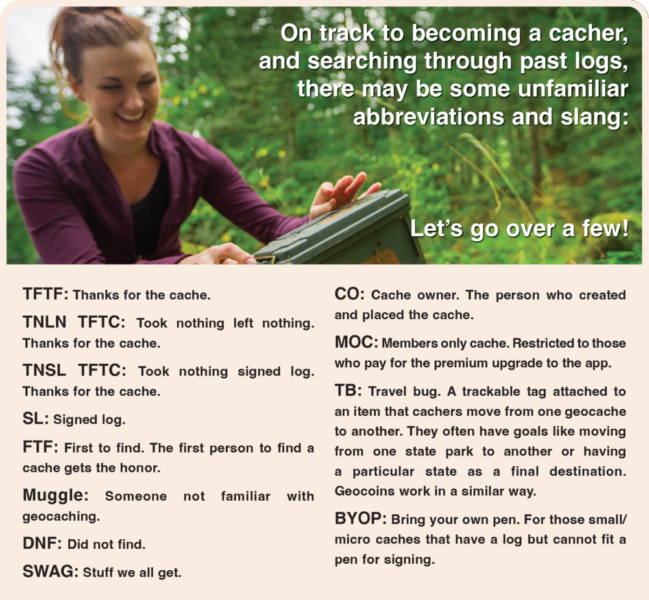
After a few minutes lurking around a light pole, I struck gold. Or in this case a tiny container not much bigger than a bottle cap. And with that, I was no longer a “muggle,” someone who is unfamiliar or inexperienced in geocaching, I was now a “cacher.” A quick look through the map of the Northern Neck and Middle Peninsula on the app shows countless more opportunities for quick grabs or more extended hunts that can be a destination unto itself or a stop along the way. There was more adventure to be had.
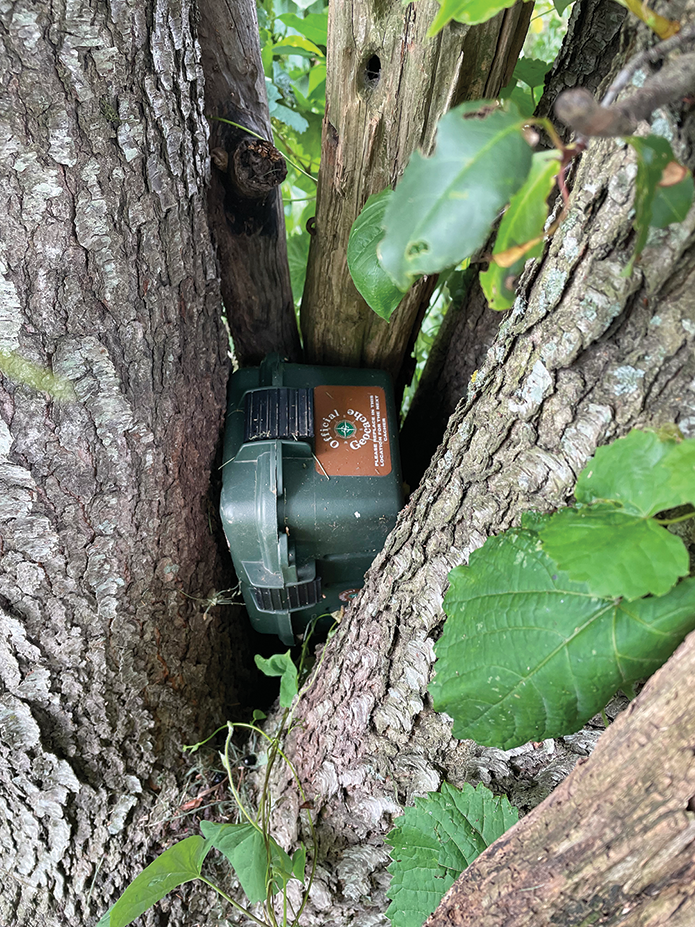
The history of geocaching can be traced back to May 3, 2000, when Dave Ulmer placed the first GPS-located cache in Beavercreek, Oregon. This was one day after Blue Switch Day, which was when the “select availability” was removed from GPS, allowing everyone around the globe improved location accuracy—from within 328 feet to 16 feet—instantly.
Ulmer, a computer consultant, wanted to test the improved accuracy through what he called the Great American GPS Stash Hunt. According to the history posted on geocaching.com, he posted coordinates in a GPS user group with simple rules: “Take some stuff, leave some stuff.” He left a black bucket containing a logbook and pencil along with various prizes. Within a month, users began posting the coordinates and their experiences in finding the stash. While the first cache is no longer active, Mingo, a cache created on May 11, 2000, and placed in Colby, Kansas, is currently the oldest active cache in the world.
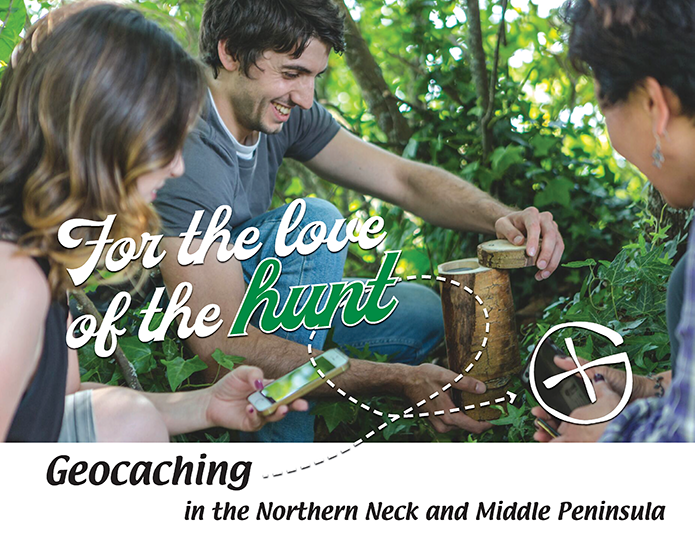
Now 26 years later, the technology and terminology may have changed, but the basics of geocaching has not. Most geocachers use an app—there are a few options but Geocaching is the official one—to locate caches. Creating a free account allows one to search for basic caches, which are rated by difficulty, terrain and size. Then, the hunt is on. The app includes a compass to help folks navigate and as they close in on the location, it will tell within a few feet how close or far they are from the cache. Some cache owners will even provide hints. Once you find the cache, you sign the log, both the physical log sheet in the container and the electronic one in the app. Then it is on to the next one.
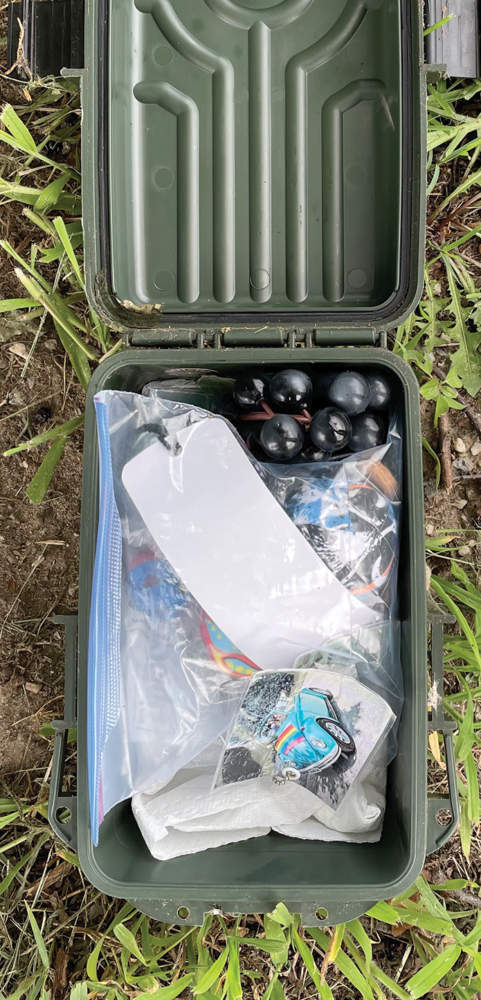
Nicole Myers, who runs the Northern Neck Geocachers Facebook group, got her start while planning a trip to Alaska and found a mention of geocaching as a fun, free family activity. “I had no idea what it was. I got on the website, downloaded the app and found caches right in our area. The Dollar General right there in Oak Grove—they have a cache.That was our first one. My son thought it was the best thing ever. He really enjoys the hunt for it, trying to find it. And then once you open the geocache, a lot of them will have little trinkets inside.”
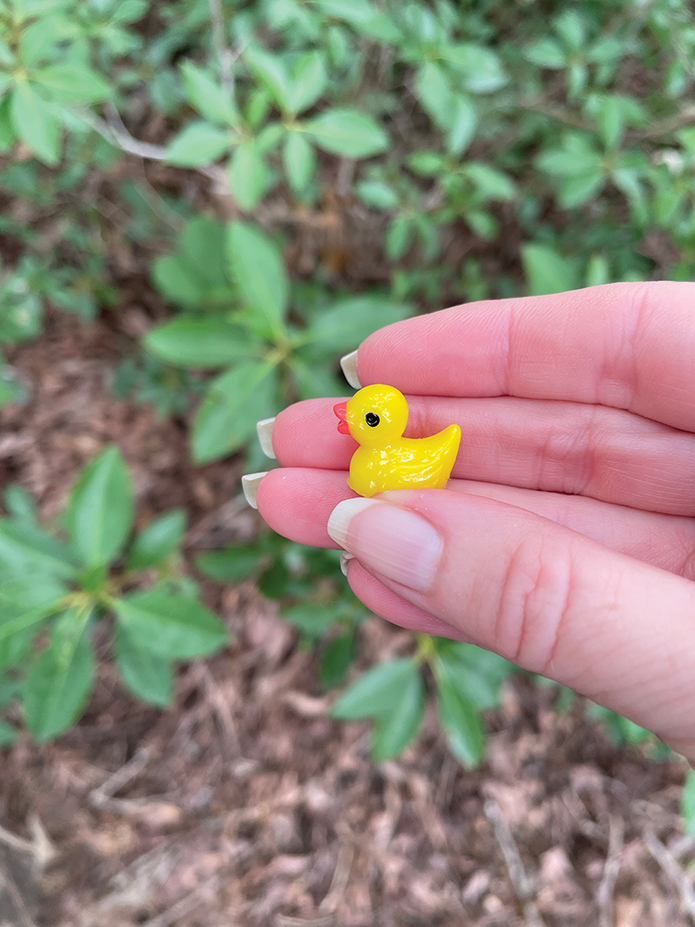
Those trinkets are either something trackable or to trade. Trackable are items meant to travel from cache to cache. Trades are pretty straightforward—if you take something, you need to leave something else. Myers takes a small bag full of trinkets with her, although she does not always trade. She has some that she collected because they were meaningful or were interesting, but oftentimes she takes a picture of the cache as a way to remember the find.
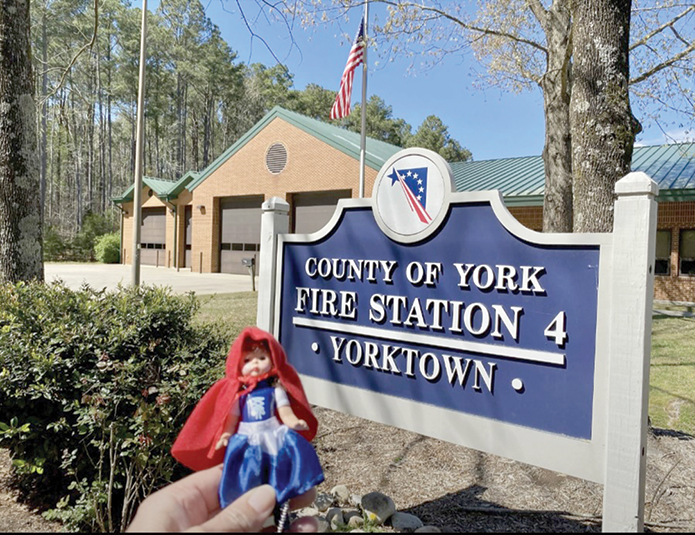
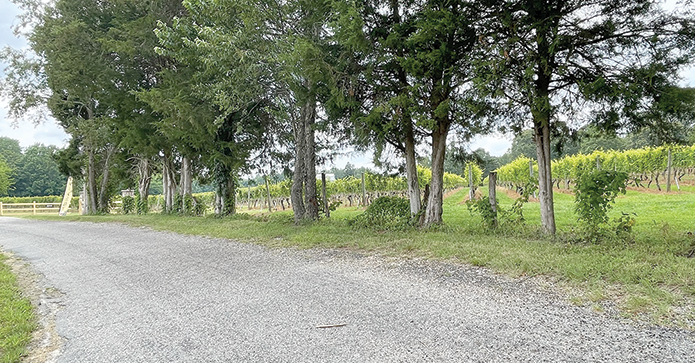
In addition to finding caches, Myers also has hidden quite a few. She created the Northern Neck Winery Geotrail, seven vineyards with caches that allow folks to enjoy some of the scenic parts of the Northern Neck while on the hunt for treasure. And that is part of the appeal of geocaching for Myers—the flexibility in searching options.
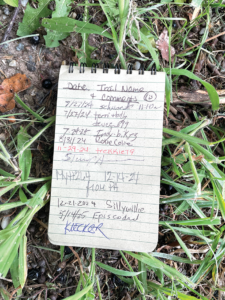
In the mood for a quick search on the way somewhere? “Some caches are super easy. They’re what we call park and grabs, where you pull up in a parking spot and it’s right there, so it’s a very, very quick.” Want to spend the morning searching? Try one of the state parks. Both Belle Isle State Park and Westmoreland State Park have multiple caches with a low level of difficulty so individuals or families can learn the ropes. For those who feel confident enough, both parks also have multi-caches that are a little more involved, but worth the extra effort. “You start at one spot and then there would be something that would lead you to another one, which would lead you to the final spot,” Myers said.
Sometimes the story behind the cache is just as interesting as the cache itself and included when selecting the cache to find. The multi-cache placed in Westmoreland State Park was created by Girl Scout Troop 3116 to earn their Brownie Letterboxing and Junior Geocaching badges. Select one of the caches on the wine trail and Myers has included some history of the surrounding land.
The same is true of the multi-state Find Your Chesapeake GeoTour. There are three Virginia caches in the Middle Peninsula and Northern Neck that are part of that tour—Deltaville Maritime Museum, Menokin and Westmoreland State Park. Choosing the Deltaville option will take folks to the cache and includes history as well as a descriptor of the rest of the Chesapeake GeoTour locations.
be found on both sides of the Rappahannock. Photo by Jackie Nunnery
Cache descriptions also include other valuable information about the location—kid friendly, dog friendly, parking, entrance fees if required and hours if applicable. Myers said it is also helpful to look at past logs, which show how active the cache is and often include photos of past finders and recommendations.
Myers offered a few other tips. “Definitely try to find caches that have been found recently. If you find a cache where multiple people are commenting that they haven’t found it, that means it’s either gone or it’s really hard. You want to make sure that your first couple caches are as successful as possible, because that’s what feeds it. Go to caches that have a lot of activity. Going to a geocache event and meeting geocachers” is another great way to get advice on geocaching in general or on a more difficult cache that you have not been able to find.
Most cache owners like Myers do maintenance “every couple of months. We try to get out and just check in on them. There’s actually an entire group of people who manage geocaches and every cache has to be approved before it’s able to go out since there are certain rules that the geocaching world has to follow, and then there are certain state rules that have to be followed as well.”
Since Myers travels frequently, she uses geocaching as part of that, whether with her family or when traveling alone for her work. First, there was the Alaskan trip that started it all, “then, when we went to the Outer Banks, they had a huge amount of geocaches down there, so we were able to do it as a family. Just everywhere we go, we can make a day out of doing geocaches. It’s a nice balance of being outside but still letting kids use technology.”
“I do it solo all the time, too. My job has me going all over the country, so I’ve gotten geocaches in many different states. I actually kind of used them as breaks. I want to go to this geocache, walk around, get some exercise, get out of the car,” she said.
For residents and visitors, geocaching is a fun way to see the surroundings with new eyes and even learn a new skill. And best of all it is easy to begin—it takes a phone, a pen and a desire to explore.