
Telling the story of Menokin is not just about an historical house. It is also telling the story of three distinct yet intertwined groups of people—the colonists, the enslaved and the Indigenous—who called this place home.
Menokin’s historians and educators are developing innovative ways to tell and experience their stories as well as the landscape that remains relatively unchanged.
Menokin: the home
The home was commissioned in 1769 as a gift by Colonel John Tayloe II to his daughter Rebecca on her marriage to Francis Lightfoot Lee. The marriage represented not just a union of two people, but two of the most powerful families in Colonial Virginia. Tayloe was one of the richest plantation owners at the time and Lee was of the influential Lee family of which a general, president and other powerful politicians would descend. He also was a signer of the Declaration of Independence, along with his brother Richard Henry Lee.
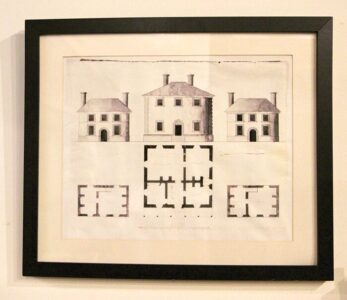
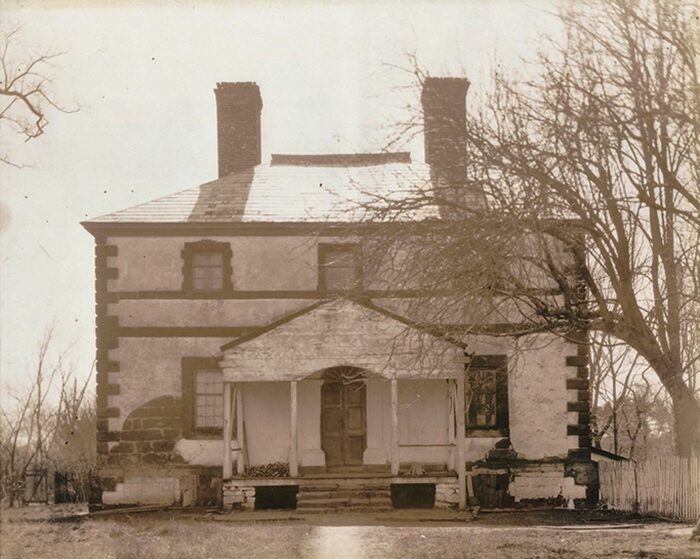
Tayloe had built the nearby Mount Airy plantation. Designs for Menokin represented a similar style but on a much smaller scale—just 40 feet by 43 feet. In the National Register of Historic Places inventory it details the local brown sandstone used as building materials and plastered over except for the decorative stone trim. At the time that Francis and Rebecca lived there, two other buildings—a kitchen and an office—stood on either side of the house, but both were gone by the time the property was entered into the registry in 1969.
The home was completed in 1775, and Francis and Rebecca lived there until 1787 when they died within days of each other. With no children, the house was passed on to their nephew and would change hands many times after that. When the house was recorded and photographed in the 1940s as part of the Historic American Building Survey, it was already in serious decline and was abandoned shortly thereafter. The Omohundro family, the last owners of the home, removed architectural details like doors, wainscoting and fireplace mantels to prevent theft and further damage in 1968. They remain in storage awaiting the day when some pieces will return to their proper place. Others are on display at Menokin’s Visitor Center.
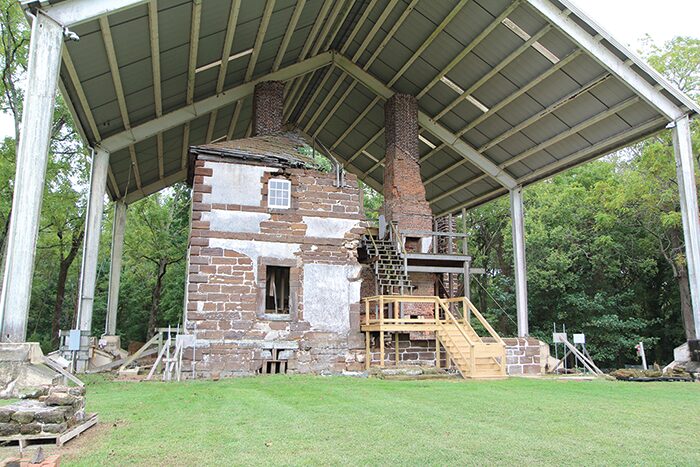
The same cannot be said of the overall structure. With the ravages of time and a falling tree, little was left standing. When T. Edgar Omohundro donated the home and 500 acres in 1995, just a couple of corners and chimney stacks remained standing amid the rubble. In 2000 a steel structure was erected to protect the ruins from the elements.
Menokin: the rebirth
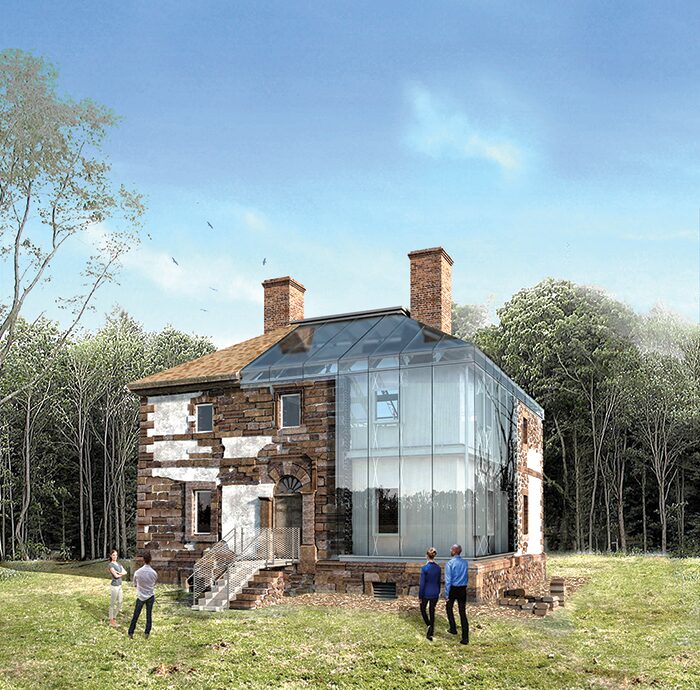
The ruins of Menokin that clung to life are now the foundations of its rebirth. Rather than rebuild, it is being reimagined by architectural firm Machado Silvetti, using the remaining cross section of the home as an educational tool to highlight the trades of 18th-century construction.
Dubbed The Glass House, it will link history with the present through a mixture of old and new materials. In what the Menokin Foundation describes as a “giant jigsaw puzzle,” about 80% of the original building materials have survived and will be put back into place. The missing structures, mainly the roof, partial walls and floors will be replaced with steel and structural glass to allow the colonial construction methods to show through.
In addition to being an innovative approach to saving the historically significant home—it is also considered a National Historic Landmark as well as listed on the national register—it is in keeping with the spirit of the gift. When T. Edgar Omohundro donated the home and property, he wished it to be used as a field school for architectural conservation and archeological study.
Menokin: the descendants
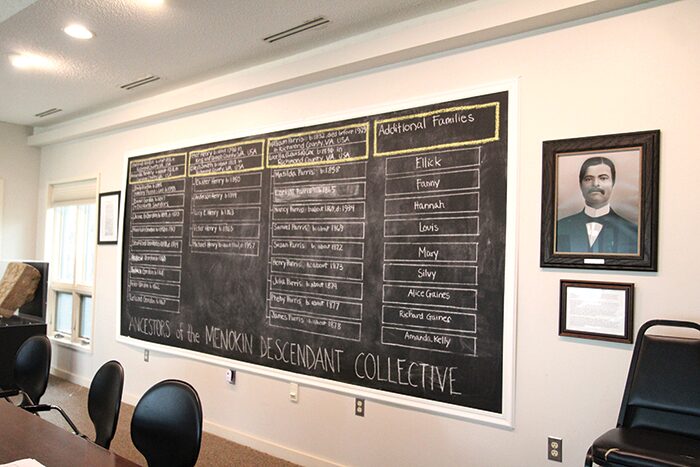
When Menokin was in operation, it is estimated that over 200 enslaved people worked the 1,000-acre tobacco plantation and built the home at its center. Their contribution to the history of the property is told through The Menokin Descendant Collective. A picture of Daniel West Gordon hangs in the visitor center, the only photograph found thus far of an enslaved person that lived at Menokin. Gordon was born into slavery in 1847 and escaped from Richard Harwood, then owner of Menokin, in 1863. According to Judith Gordon, one of his direct descendants, he returned to Menokin around 1867 to work as a tenant farmer alongside his father and two brothers. Gordon’s portrait overlooks a growing genealogy of those families tied to the property through slavery.
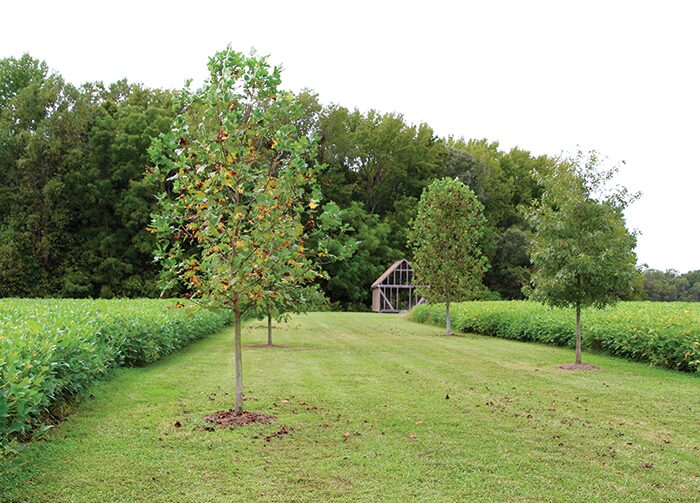
A short walk outside the visitor center leads to the Descendant’s Path where trees have been planted representing the family names of those enslaved on the property, namely Gordon, Henry, Parris, Beverly, Smith and Cox. The path leads to the Remembrance Structure, a representation of a cabin for field slaves, built on a former site. Like The Glass House, the open construction shows framing techniques that would have been used by the enslaved builders to construct the dwelling. Walking into the space also allows visitors to feel the space that would have been home to upwards of 10 people.
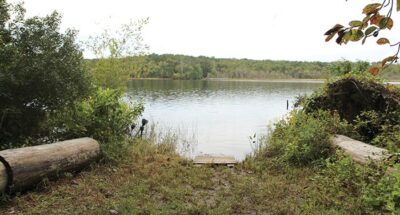
Near the Remembrance Structure is the trailhead that leads along an old curved trail through the woods. This tobacco rolling road was designed to roll large barrels of tobacco called hogsheads from the fields to the curing barns and later to the docks for shipment. Taking this path down to the water’s edge on Cat Point Creek leads visitors to where a shipping dock would have been, but today is a kayak launch, free and open to the public.
Menokin: the Indigenous
The Rappahannock River Valley where the plantation is located was long the ancestral home of the Rappahannock Tribe and Menokin was the word used to describe the area. As the Rappahannock-Algonquian language was mainly oral, the exact meaning of the word is no longer known. Even today, the Rappahannock are closely associated with Menokin. Across the river within the Rappahannock River Valley National Wildlife Refuge is The Lodge, which will serve as the Indigenous Environmental and Conservation Education Center for the Rappahannock Tribe.
Menokin’s director of education Alice French said the story of the indigenous people continues to be uncovered. Artifacts, including projectile points and cord pottery estimated to be from 900-1200 A.D. have been found on the property, a testament to their long ties to this land and surrounding waters. French said they continue to integrate their stories into programs at Menokin like this fall’s harvest festival, Pumpkins Illuminated, which will feature a dugout canoe demonstration. The Rappahannock are also recognized through the Heritage Garden, a living exhibit illustrating the “three sisters” method of growing crops. Corn is grown on a small hill, with beans grown around, using the corn stalks as a trellis. Squash is interspersed through the growing field.
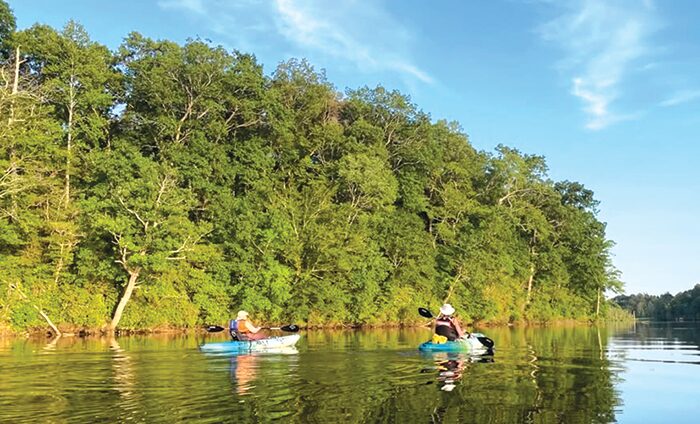
A special guided Sunset/Full Moon Paddle on Cat Point Creek is planned for Friday, August 8. According to French, the Eastern Woodlands Tribe called this moon the Sturgeon Moon due to the abundance of the fish during August. The two-hour guided tour will begin at 6:30 p.m. and incude all equipment. Tickets are $25 per person.
Exploring Menokin
Guided Tours (60 minutes): Wednesdays through Sundays 10 a.m.-3 p.m. $15 per person; free for children 12 and younger. Reservations encouraged online or by phone. Walking tours cover about a mile of flat terrain. Golf cart tours are also available. Call to arrange custom tours for groups of 10 or more.
Use the Northern Neck Hidden History Trail app https://nnkhiddenhistorytrail.org/ for a self guided tour using augmented reality.
Trails: There are three trails on the property— the 1.25 mile round trip from the house to Cat Point Creek; the 1.5 mile round trip on the rolling road traverse which starts near the visitor center and takes you to the kayak launch; and the .5 mile roundtrip from the kayak launch to Muddy Run.
Kayak rentals: Hourly rate $15 or four hours for $45. Includes kayak, paddle, seat and life jacket. Reserve online. A road and small parking lot is available near the launch.
Upcoming special events
- Fairy House displays: Ongoing through October 5.
- Sunset/Moonlight Guided Paddle: Saturday, September 6, 6-8 p.m.
- Ebb & Flow Weekend: Friday, September 12, 10:30 a.m. to Sunday, September 14, 11:30 a.m. Lodging at Stratford Hall with a continental breakfast and tour. Travel to Menokin for a tour of the grounds followed by the Soul by the Rivah Music & Food festival in Tappahannock. $450 per couple.
- Sunrise End of Summer Guided Paddle: Saturday, September 20, 6:30-8:30 a.m.
- Pumpkins Illuminated and Makers’ Day: Friday, October 24, 6-9 p.m., Pumpkins Illuminated trail.
- Saturday, October 25, 1-5 p.m., craft demonstrations and vendors; 5-9 p.m., Pumpkins Illuminated trail with food vendors and music.
- Sunday, October 26, 1-5 p.m., pumpkin carving and lantern making; 5-9.p.m., Pumpkins Illuminated trail with food vendors and music.
*Guided paddles are $25 per person and include all equipment. Weather permitting. Reserve online.
Know before you go
4037 Menokin Road, Warsaw 804-333-1776
Grounds: Open daily, 7 a.m.-7 p.m. Trails are dog-friendly.
Visitor Center hours: Wednesdays to Sundays 10 a.m.-3 p.m.